
Rewards Programs for Small Business: How to Start One
Learn how to start a rewards program for your small business, choose the right rewards, estimate costs, and launch a program customers can use.
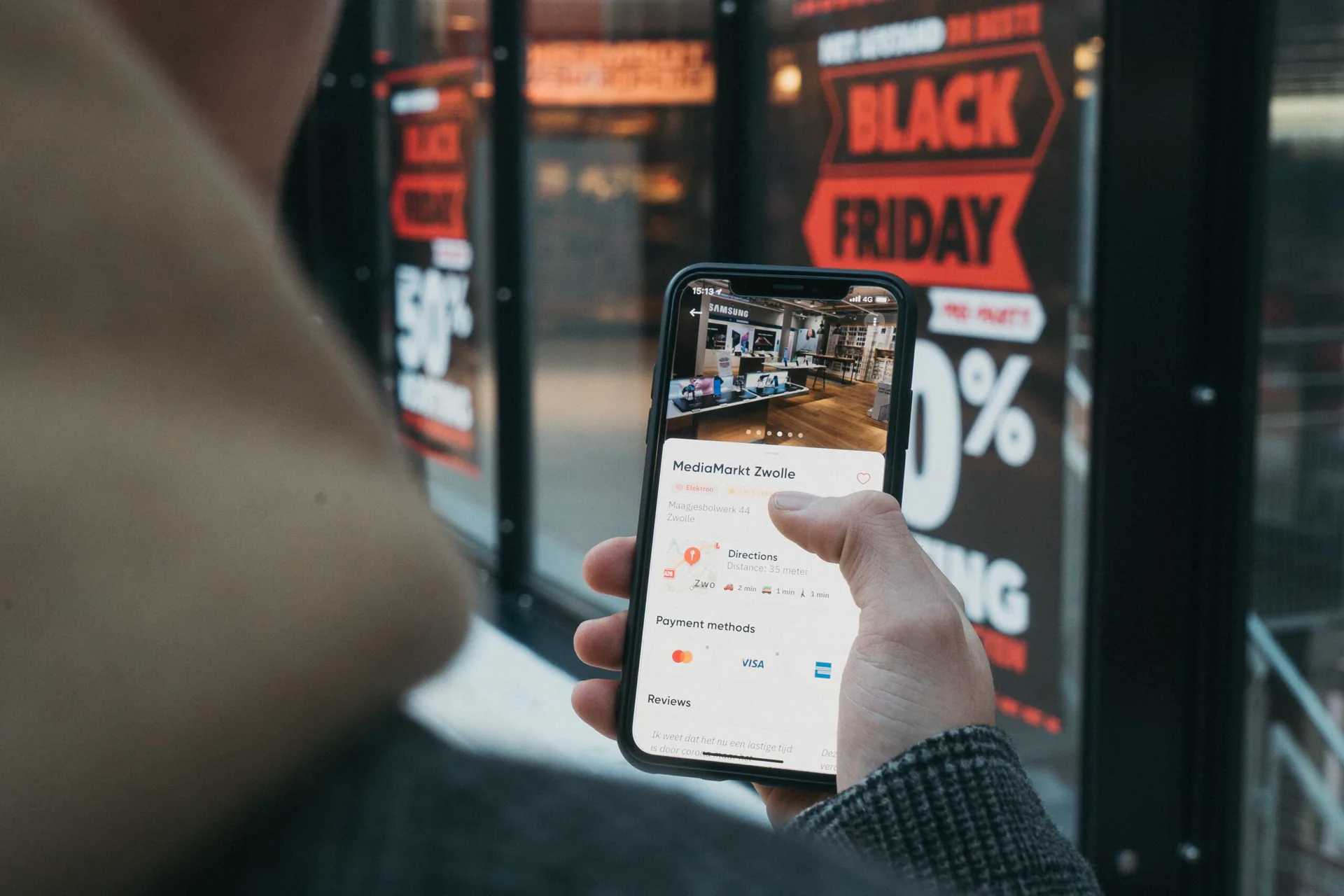
A small-business rewards program gives customers points, stamps, credit or benefits for eligible purchases or engagement. You can start with a simple manual process or use software, depending on how customers shop and how your team will record rewards.
To start, choose a goal, select a reward model, calculate its affordability, define the rules and choose a tracking method. Then prepare signup and redemption, train staff, test the process and review the results. This guide walks through those decisions with a retail example and a cost checklist.
What is a rewards program for a small business?
A rewards program sets out what customers do to earn a benefit and how they receive it. A café might stamp a card for eligible drinks; a retailer might award points toward a future discount.
The customer needs to understand the offer, while the business needs a consistent way to record progress and redemption. The right approach depends on purchase frequency, margins and the work your team can support.
Benefits of rewards programs for small businesses

Image source: Freepik
A relevant reward gives customers a reason to return. Participation and feedback can also help you understand what they value. A referral incentive may introduce new customers when the offer suits your business.
These are possible benefits, not guaranteed results. A program is worthwhile only if the value it brings justifies the rewards and operating costs. Keep a baseline so you can assess changes after launch.
Types of rewards programs for small businesses

Image source: Freepik
Choose the simplest model that fits your customers’ buying habits and your ability to track it.
| Program type | How it works | Suitable businesses | Main consideration |
|---|---|---|---|
| Punch or stamp cards | Customers collect stamps or visits toward a reward. | Cafés, salons and local services | Recording eligible visits consistently |
| Points-based rewards | Eligible purchases earn points exchangeable for rewards. | Retail, restaurants and ecommerce | Accurate balances and redemption records |
| Tiered or VIP programs | Spending or activity thresholds unlock benefits. | Retailers with different customer spending patterns | Clear qualification and renewal rules |
| Referral programs | Customers earn an incentive for a qualifying referral. | Service businesses and local retailers | Verifying referrals and preventing duplicates |
| Paid memberships | Customers pay for ongoing benefits. | Businesses with frequent repeat purchases | Benefits that justify the fee and their cost |
| Cashback or store credit | Eligible purchases generate credit for future spending. | Businesses with repeat transactions | Funding the credit and applying it correctly |
Stamps suit an offer customers can understand by counting visits. Points allow spending-based earning, but require reliable records. Tiers and paid memberships need benefits the business can deliver consistently. Referral and credit programs need precise eligibility rules.
Charitable incentives, social activity or challenges can complement these models where appropriate. For more inspiration, see customer loyalty program ideas.
How to start a rewards program for your small business

Image source: Freepik
Use these steps to prepare one workable customer journey before expanding the program.
Step 1: Define the problem you want to solve
Choose a specific objective, such as encouraging a second purchase or increasing repeat visits among existing customers. Record your current performance over a defined period. Set your own target using that baseline; another business’s outcome is not a forecast for yours.
Step 2: Understand customer purchasing behavior
Look at how often customers buy, typical transaction values and product margins. Ask which benefits they would use. A frequent low-value purchase may suit stamps, while an occasional high-value service may call for a different benefit or threshold.
Step 3: Choose a rewards structure
Use the comparison above to select a model you can explain in a sentence. Start with one clear earning rule and reward where practical. Avoid adding tiers, referrals and special promotions before you know the basic process works.
Step 4: Calculate reward affordability
Estimate the value and cost of the reward against the qualifying spending or visits. For a discount, divide its face value by the spending required to earn it to find the nominal reward rate. For a free product, consider its actual product and fulfillment costs.
Allow for software, staff time and promotion too. The worked example below shows why a reward percentage alone does not establish profitability.
Step 5: Define earning and redemption rules
Write down qualifying products or services, thresholds, exclusions and any expiry conditions. Explain whether a reward is applied at checkout, exchanged for a product or redeemed another way.
Decide how refunds or cancellations affect earned points and used rewards. Give staff a way to check eligibility and record redemption once, with a process for correcting mistakes. Keep the customer-facing explanation short and make the full terms accessible.
Step 6: Choose a tracking method
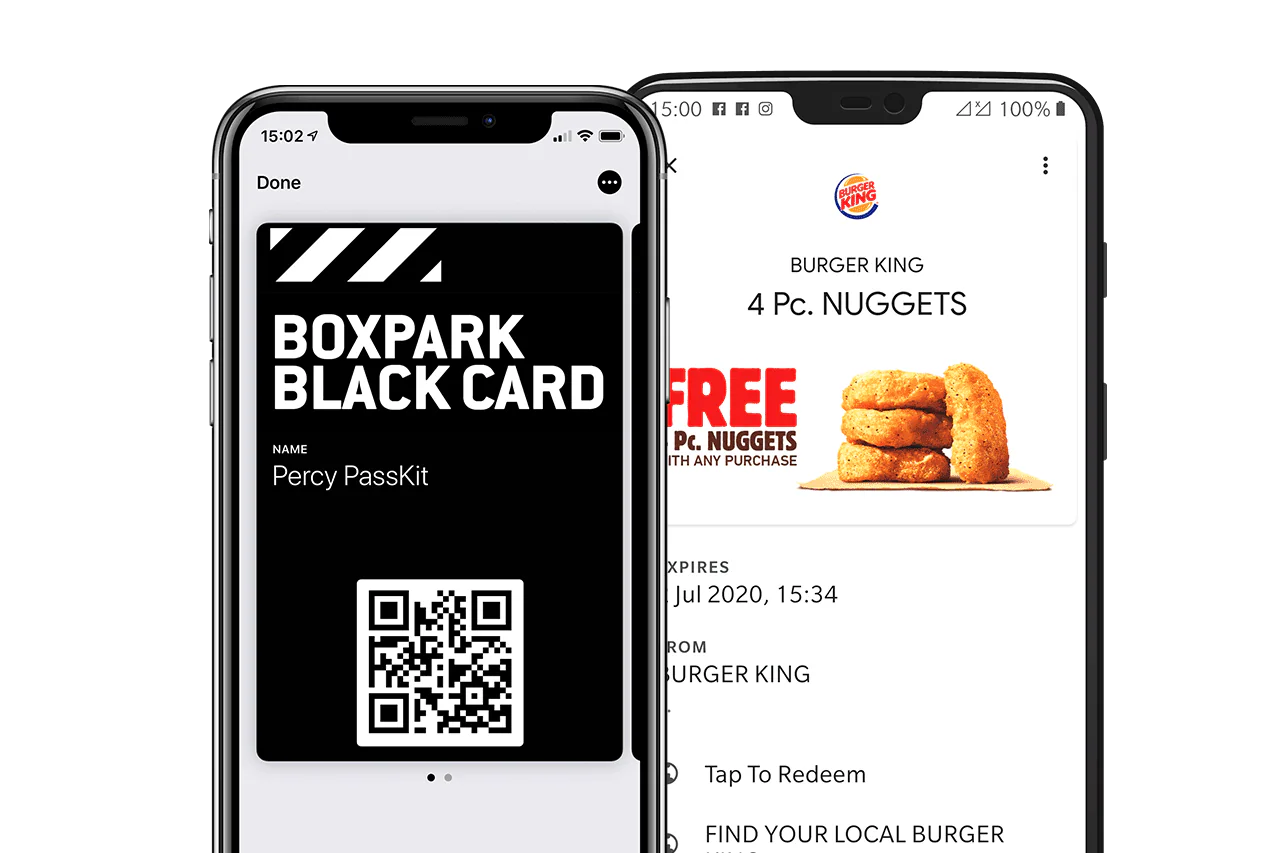
A physical card can be stamped manually. A staff-managed digital record can hold member balances. A supported POS integration can connect earning and redemption to transactions. A wallet card can display member information supplied through the chosen process.
Choose who records each event and where the authoritative balance lives. A card’s appearance or QR code does not automatically create purchase tracking.
Step 7: Create the signup and customer experience
Keep enrollment straightforward and request only information you need. Show customers how to identify themselves, check progress and claim a reward. Explain how their information will be used and record communication preferences.
Assign staff responsibility for enrollment, earning, redemption and customer queries. Use loyalty card templates when choosing a card’s presentation; that design decision is separate from configuring reward rules.
Step 8: Test and launch

Image source: Freepik
Run a sample customer through signup, an eligible purchase, the progress update and redemption. Test refunds where applicable, a missing member identifier and an attempted duplicate redemption. Check both the customer-facing information and the underlying record.
Train staff using the same scenarios. Start with a manageable group or period so you can resolve confusing rules or recording problems before a wider launch.
Step 9: Monitor and improve
Review participation, repeat purchases, redemption and costs at a regular interval. Ask whether customers understand the offer and can reach the reward. Adjust based on records and feedback, and communicate changes clearly to existing members.
Example: Creating a rewards program for a small retail store
A retailer wants to encourage repeat purchases. In this example, its program offers one point per $1 of eligible spending and a $5 discount after 100 points.
- A customer joins and receives a member identifier.
- At a qualifying $40 purchase, staff identify the member and record the transaction. The chosen tracking method credits 40 points.
- A later eligible $60 purchase adds 60 points, bringing the balance to 100.
- On a qualifying future purchase, the customer requests the $5 reward.
- Staff or the configured system verifies eligibility, applies the discount, deducts 100 points and records the redemption.
Each record should identify the member, qualifying transaction, points earned or deducted and the date. The business must be able to distinguish a new purchase from a duplicate entry.
If an earning purchase is refunded, apply the published rule for reversing its points. Decide in advance how to handle a refund after those points have already been redeemed; do not improvise a different policy at each checkout.
The $5 reward after $100 of qualifying spending has a nominal reward value of 5%. That is not automatically the program’s actual cost or return on investment. Profitability also depends on margins, how many rewards are redeemed, software and administration, and whether the program generates additional purchases.
A paper record, staff-managed system or supported POS connection could administer this example. A wallet pass is optional and does not independently perform the transaction steps.
Do you need loyalty software or a POS system?

Image: Freepik
You can operate a loyalty program without a POS integration. The choice is how to record activity accurately at your expected volume.
- Physical cards: Staff mark purchases or visits manually and check the card when a reward is claimed.
- Staff-managed digital records: Staff update a member record in the selected tool. Set permissions and a correction process.
- POS-connected loyalty software: A compatible, configured connection can use qualifying transactions to update rewards and support redemption.
- Digital wallet cards: Customers keep member information on their phones. A suitable operational process or integration still records activity and manages rewards.
A wallet pass can avoid requiring a separate dedicated loyalty app, but customers still need a compatible wallet and device.
What to check before choosing software
Write down your program requirements first. Check compatibility with existing systems, enrollment, purchase recording, redemption, staff usability, reporting and total costs. Confirm integration work and ongoing support rather than assuming every advertised feature works with your current checkout.
For vendor comparisons, use best loyalty program apps. This guide focuses on preparing the program they will support.
How much does a small-business rewards program cost?
There is no single starting price. A manual program can avoid a software subscription, but still needs rewards, cards, staff time and reliable administration. Digital tools may simplify some tasks while adding software or integration costs.
| Cost category | What the business should consider |
|---|---|
| Rewards | Discounts, free products, store credit and fulfillment |
| Software | Subscription or usage charges and additional services |
| Physical cards | Printing, replacement and recordkeeping |
| Integrations | POS, ecommerce, automation or custom development |
| Administration | Training, tracking, corrections and customer support |
| Promotion | Signs, email and other launch materials |
Before launch, estimate the likely eligible activity, rewards earned and redeemed, and the cost of delivering them. Add recurring fees and staff time, and separate one-time setup costs from ongoing expenses. Review a lower-redemption and a higher-redemption scenario instead of assuming every member behaves alike.
For PassKit specifically, current pricing uses a platform fee plus applicable pass-volume charges. Check the current calculator and terms when budgeting. For a fuller cost discussion, see how much a loyalty program costs.
How PassKit can support digital loyalty cards
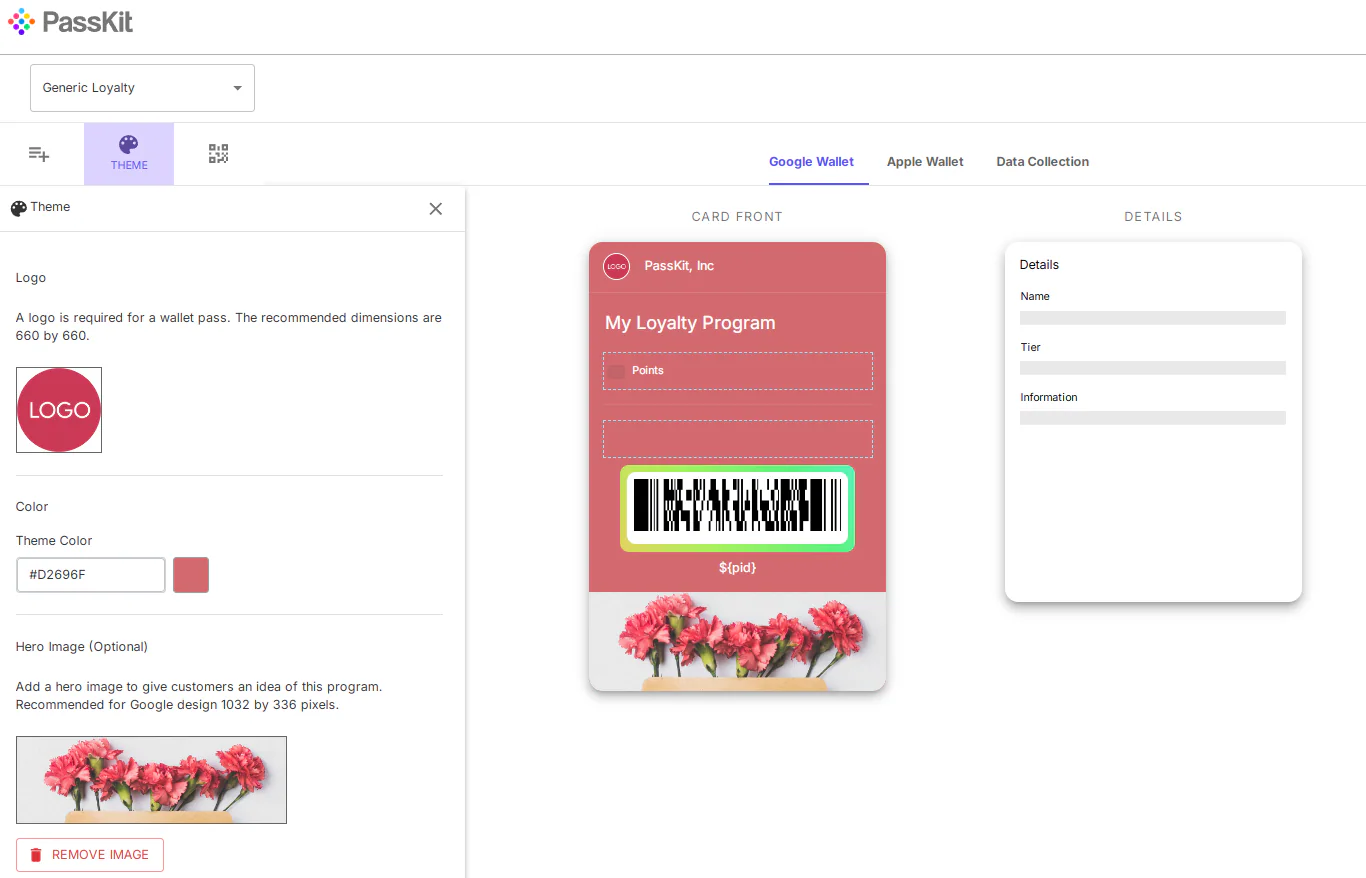
PassKit supports creating branded digital loyalty passes, distributing them to customers and displaying member or reward information in Apple Wallet and Google Wallet. A pass can show information such as an identifier, points balance or tier through supported fields.
Its integration options connect wallet activity with existing systems using supported tools, automation or APIs. The connection depends on your POS, ecommerce or loyalty system and the workflow you need.
Updating the information customers see
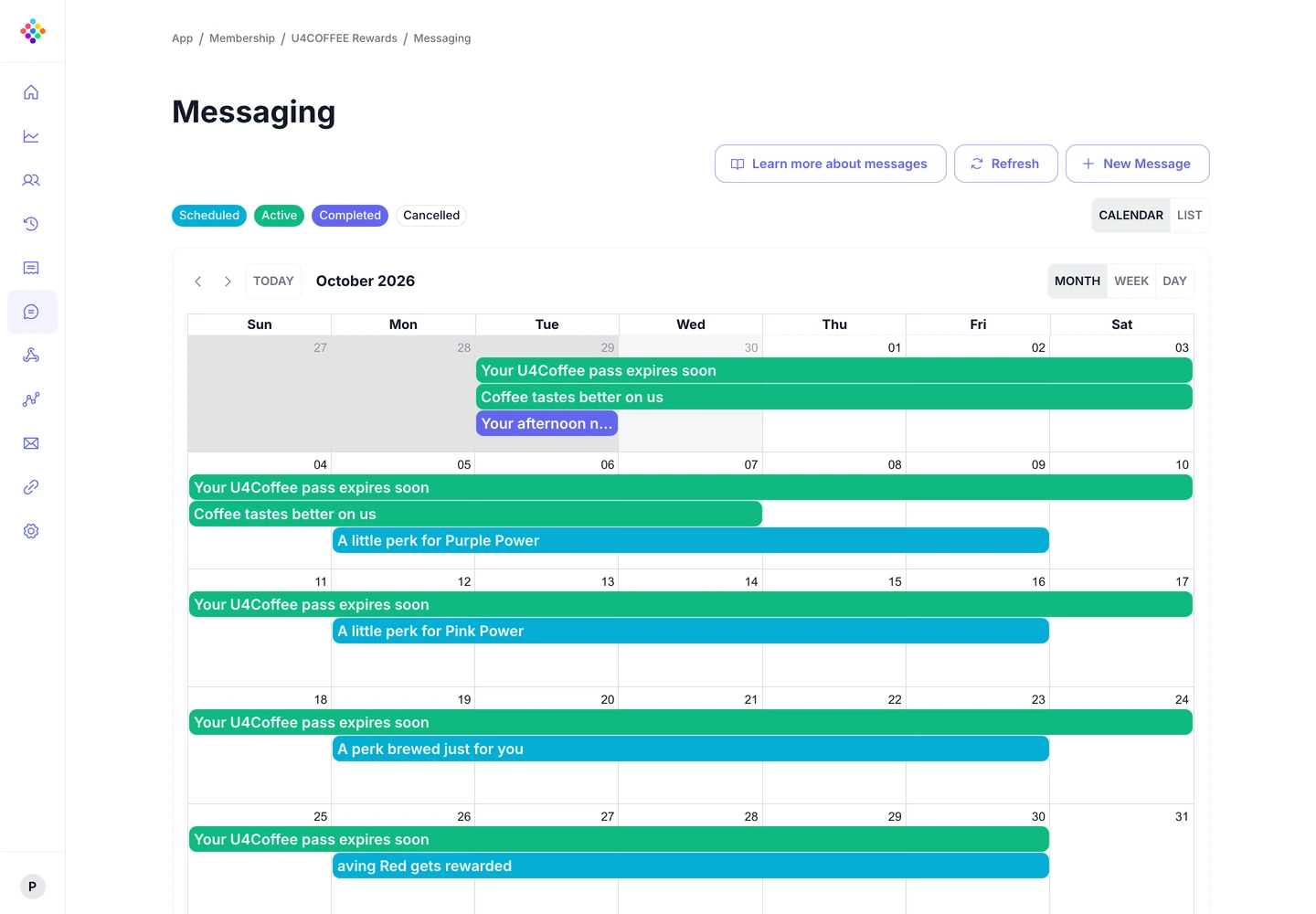
PassKit Messaging calendar showing planned wallet communications.
Purchase events and reward rules need an appropriate system and configuration before earning, redemption or pass updates can be automatic. A wallet pass is separate from payment processing and does not automatically detect every sale.
PassKit’s integration planning guide explains how existing business records can supply pass updates. Wallet analytics describe pass-related activity; they do not independently establish repeat-purchase revenue or customer lifetime value.
Explore the PassKit loyalty template if a wallet card fits your planned customer journey.
How to promote your small-business rewards program
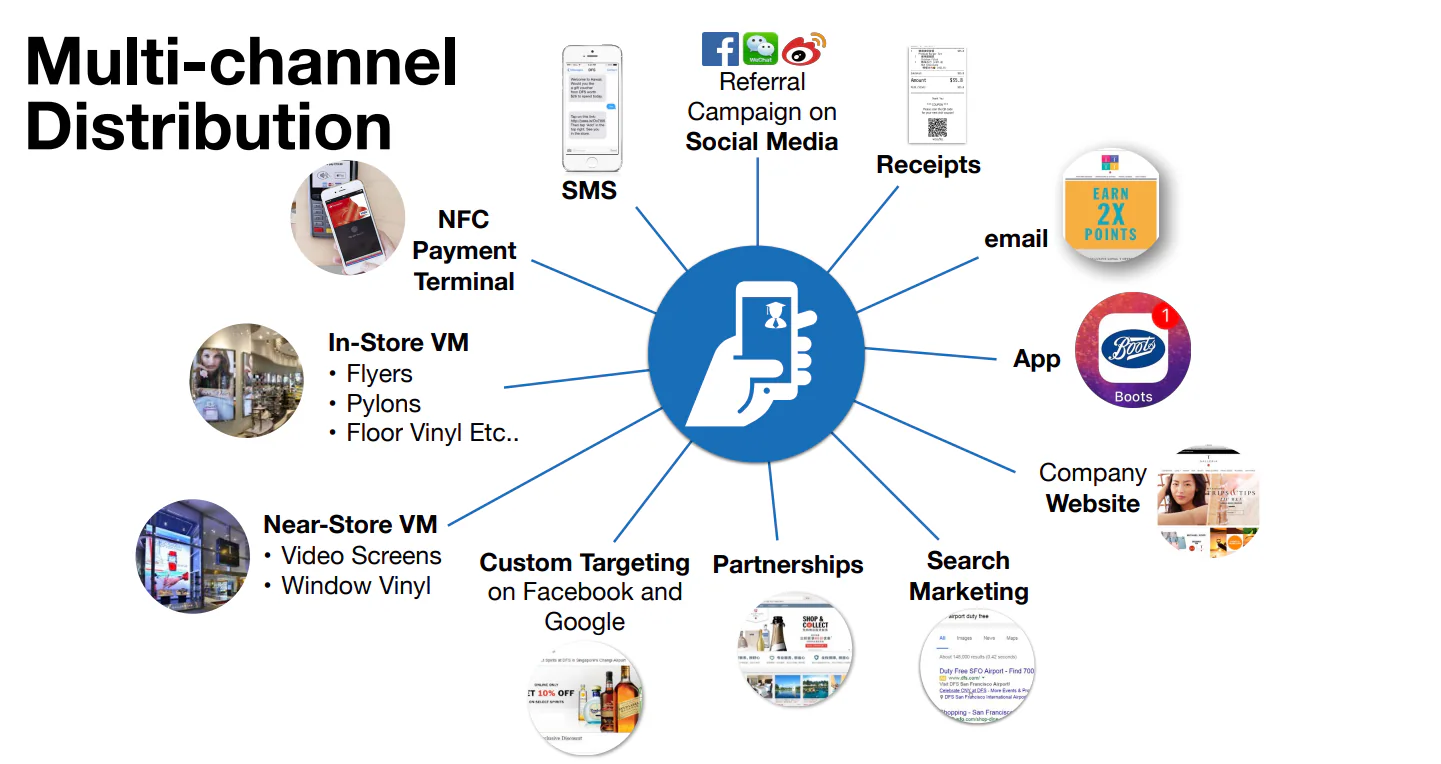
Make the offer visible where customers already interact with the business:
- Train checkout staff to explain the reward and signup process.
- Use in-store signage with a clear next step.
- Add website information and mention the program to existing customers.
- Use email or social media to explain benefits and answer questions.
- Add receipt information where your system supports it.
For example, a café could display a signup QR code at the counter and have staff explain the qualifying drinks and reward threshold during a purchase. The code opens the enrollment route; it does not itself record the customer’s reward activity.
Keep messages consistent with the actual rules. A signup incentive is optional and should be included in the reward budget.
How to measure whether your rewards program works
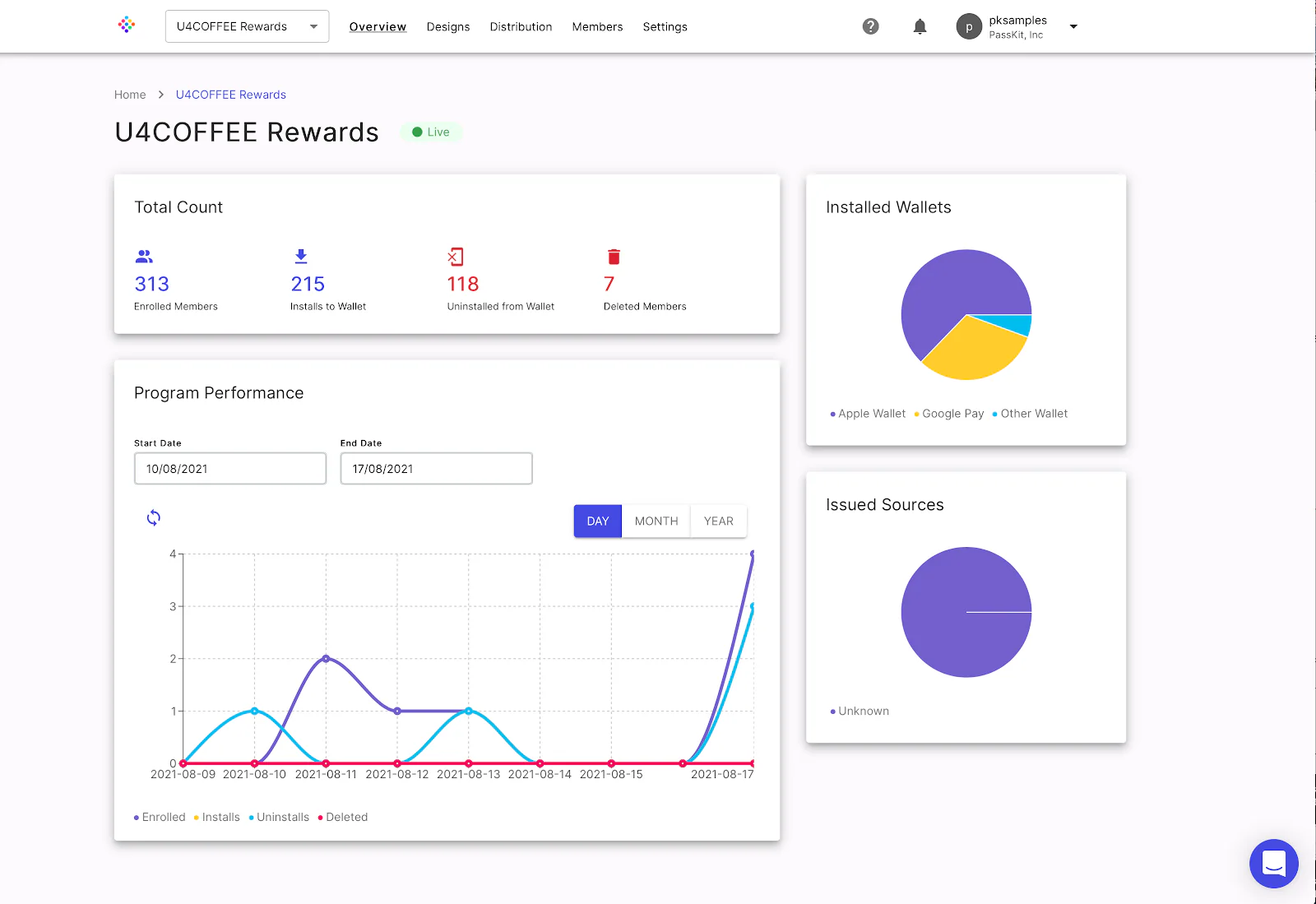
Compare a defined period with the baseline you recorded. Use consistent definitions and consider seasonality, price changes and other promotions.
- Enrollment rate: Customers joining divided by the eligible customers you measured for that period.
- Active participation: Members earning or redeeming during a defined period, reported as a count or share of enrolled members.
- Repeat purchase rate: The share of customers making another purchase within the selected timeframe.
- Reward redemption: Earned rewards actually redeemed; state which rewards and period are included.
- Reward costs: Delivered rewards plus software, administration and other operating expenses.
- Customer feedback: Whether members understand the rules, value the benefits and find redemption straightforward.
POS or ecommerce records supply transactions and refunds. Loyalty records supply points, member activity and redemption. Wallet-pass analytics can report lifecycle signals such as creation, installation and updates, with redemption-related events where the workflow records them. They do not measure every purchase or prove that a customer viewed a pass.
Higher spending among members than nonmembers does not, by itself, show that the program caused the difference. Compare similar customers or periods where possible. For more detailed analysis, see customer loyalty analytics.
Use feedback to improve customer communications
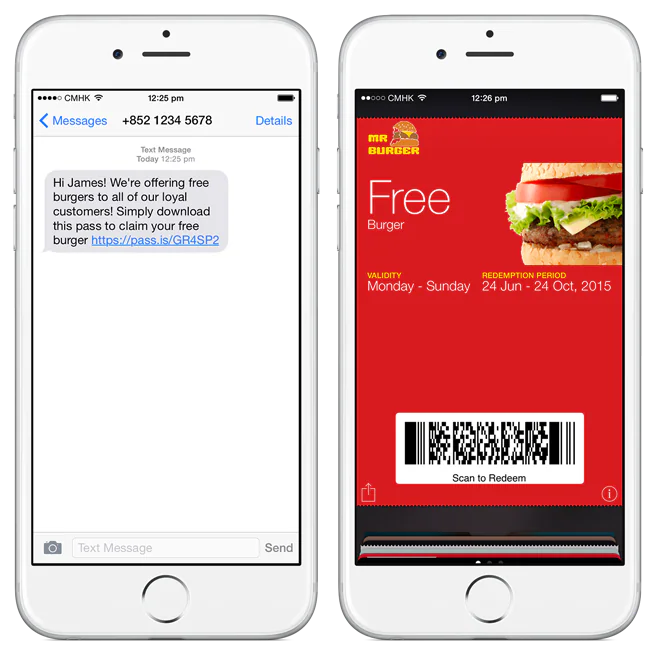
If customers repeatedly ask how to earn or redeem, revise the explanation on the card, signs and messages. Email or SMS can clarify the next step for customers who choose those communications. Check whether the changes reduce confusion instead of simply sending more promotions.
Common mistakes to avoid
- Rewards that undermine margins: Estimate delivery costs and review redemption before expanding the offer.
- Unreachable rewards: Match thresholds to realistic purchase frequency so customers can see progress.
- Complicated rules: Use a short explanation and make exclusions and full terms easy to find.
- Unprepared staff: Provide consistent instructions and a route for resolving missing points or disputed rewards.
- Choosing software too early: Define the customer journey and recording requirements before selecting tools.
- Failing to measure or adjust: Review costs, participation and feedback regularly; communicate changes rather than leaving customers with conflicting rules.
Final thoughts
Start with one clear reward, a cost you can support and a reliable way to record earning and redemption. Test the customer journey with staff, launch on a manageable scale and use the results to decide what to improve.
FAQs about rewards programs for small business
How do I start a rewards program for my small business?
Choose a goal and rewards model, estimate costs and define earning and redemption rules. Select a tracking method, prepare signup and staff instructions, test the journey and review results after launch.
What is the best loyalty program for a small business?
The best fit depends on purchase frequency, customer preferences, margins and tracking capacity. Stamps may suit frequent visits, points can reflect spending, and tiers or paid benefits need a clear qualification process and sustainable rewards.
How much does it cost to start a small-business rewards program?
Include rewards, software, cards, integrations, administration and promotion. A manual approach may have minimal software costs, but rewards and staff time still need funding. Compare setup expenses with recurring costs using your own expected activity.
Can I run a loyalty program without a POS system?
Yes. Staff can stamp physical cards or maintain member records in a separate tool. You still need a consistent process for recording eligible activity, checking rewards and preventing duplicate redemption. A POS connection can automate supported steps when configured.
Do customers need to download an app for a loyalty program?
Not always. Physical cards require no app, and wallet passes can be saved in a compatible wallet without a separate dedicated loyalty app. Other programs use their own app or a web account. Choose the experience your customers and team can support.
How do I create a points-based rewards program?
Define which activity earns points, the earning rate, reward thresholds and redemption process. Keep an accurate member balance, record earned and used points, and explain refunds or expiry. Test those rules with sample transactions before launch.
What rewards work best for small businesses?
Rewards should be relevant, attainable and affordable. Depending on the business, customers might value a discount, product, service benefit or exclusive access. Ask customers what they would use and calculate the cost before committing.
How do I know whether my rewards program is successful?
Compare participation, repeat purchases, redemption and costs with your goals and baseline. Combine transaction and loyalty records with customer feedback; wallet engagement alone does not establish sales performance or profitability.