
Best Loyalty Platform Providers by Use Case in 2026
Compare loyalty platform providers by use case, features, integrations, and the type of loyalty programme each business needs.

Choosing a loyalty platform provider is less about finding the provider with the longest feature list and more about selecting a solution that fits how your business sells, engages customers and manages data. Ecommerce brands often need storefront and marketing integrations, small and medium-sized businesses (SMBs) may value fast out-of-the-box implementation, enterprises require omnichannel scale and stronger governance, and technical teams may prefer the flexibility of an API-first platform.
This guide compares loyalty platform providers by use case, business fit, loyalty capabilities, integrations, implementation requirements and important tradeoffs. The goal is to help you build a shortlist that matches your objectives, industry, tech stack, customer channels and internal resources.
What Is a Loyalty Platform Provider?
A loyalty platform provider is a company that supplies the software and supporting services businesses use to create, manage and measure customer loyalty programs. Depending on the product, the platform may manage member enrollment, customer rewards, points, tiers, referrals, earning and redemption rules, segmentation, retention campaigns and program reporting.
A loyalty platform can also exchange information with ecommerce platforms, point-of-sale systems, customer relationship management systems, customer data platforms, mobile apps and digital wallets. These connections help keep member identities, reward eligibility, points balances and program activity consistent across different customer touchpoints.
The provider is the company supplying the solution, while the loyalty platform is the underlying technology used to operate the program. Some providers also offer implementation, system integration, loyalty strategy, technical support and ongoing program management.
Best Loyalty Platform Providers at a Glance
Each provider is matched to the use case where its platform model and capabilities offer the strongest fit. The order does not represent an overall ranking, and “best for” does not mean that one provider is the right choice for every business.
Provider capabilities were reviewed in July 2026 using official product information and compared across business fit, platform model, loyalty capabilities, integrations, implementation requirements and limitations.
| Provider | Best for | Business fit | Platform type | Integration focus | Main tradeoff |
|---|---|---|---|---|---|
| Loopy Loyalty | Digital stamp cards | Small and local businesses | Out-of-the-box loyalty software | Wallets, enrollment and scanning | Primarily designed for stamp- and visit-based programs |
| Yotpo | Ecommerce loyalty | Ecommerce and Shopify brands | Ecommerce loyalty platform | Shopify and marketing stack | Less relevant to businesses operating outside ecommerce |
| PassKit | Wallet-first loyalty | Businesses with existing systems or custom wallet requirements | Mobile-wallet platform | CRM, POS, APIs and digital wallets | Complex loyalty logic may require an existing loyalty engine or source system |
| Open Loyalty | Headless loyalty | Technical and product teams | API-first loyalty engine | Custom frontends and system integrations | Requires development resources and a customer-facing frontend |
| Talon.One | Enterprise loyalty | Global organizations with complex requirements | Enterprise loyalty and promotion engine | Multi-system enterprise technology stacks | Greater implementation complexity and custom pricing |
Loyalty Platform Providers Reviewed by Use Case
These providers operate at different layers of the loyalty stack, so a feature-for-feature comparison can be misleading. Each review focuses on the job the platform is designed to perform and where it fits best.
Loopy Loyalty: Best for Out-of-the-Box Digital Stamp Cards
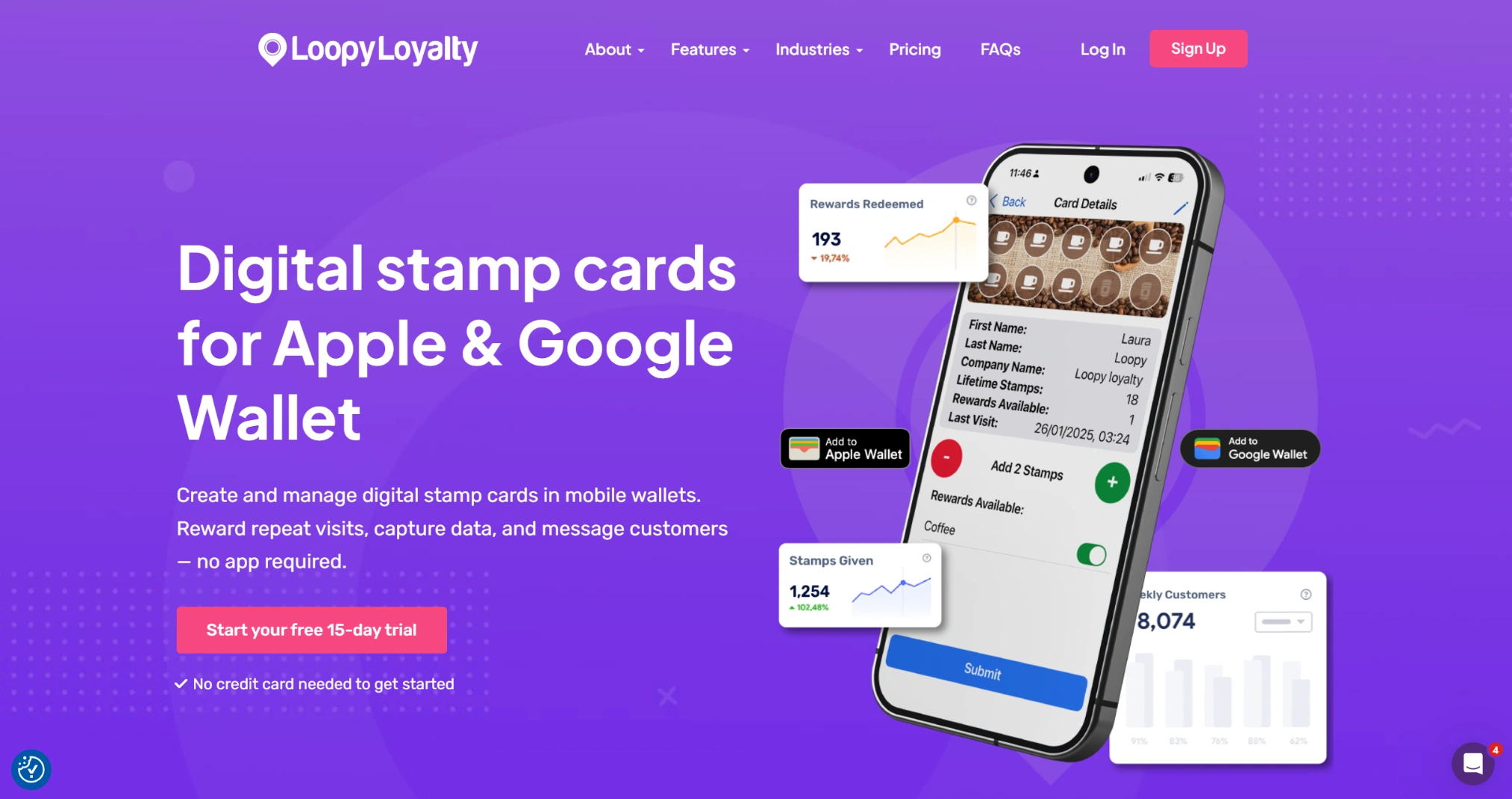
Out-of-the-box loyalty card software provides a preconfigured program that a business can launch without developing a loyalty engine or customer application. Loopy Loyalty applies this model to digital stamp cards for Apple Wallet and Google Wallet.
Why it fits this use case
Loopy Loyalty suits cafés, restaurants, salons, gyms and local retailers that reward repeat visits or purchases. It replaces paper punch cards with a branded digital loyalty card while retaining the familiar “collect stamps, receive a reward” experience.
For a small business comparing loyalty program software, its advantage is operational simplicity. Customers enroll through a QR code or link, save the card to their mobile wallet and present it when collecting a stamp or redeeming a reward. No separate loyalty app is required.
Key loyalty capabilities
Businesses can create single- or multi-reward stamp cards, determine how many stamps customers must collect and customize each card with their branding. Staff use the Stamper App to issue stamps and process rewards.
The dashboard tracks enrollments, active cards, stamps and redemptions. Businesses can also update wallet passes and send messages to enrolled customers.
Integrations and implementation
Loopy Loyalty can operate without a custom application, development project or additional scanning hardware. This supports a fast launch and gives staff a straightforward enrollment and stamping process.
Businesses that want stamps issued automatically from transaction data should review Loopy Loyalty’s integration options to confirm how their POS, ecommerce platform or automation workflow can connect.
Main tradeoffs
Loopy Loyalty is primarily designed for stamp- and visit-based programs. Businesses requiring spend-based points, VIP tiers, referral management, complex earning rules or shared rewards across several brands may need a broader customer loyalty platform.
Yotpo: Best for Ecommerce Loyalty
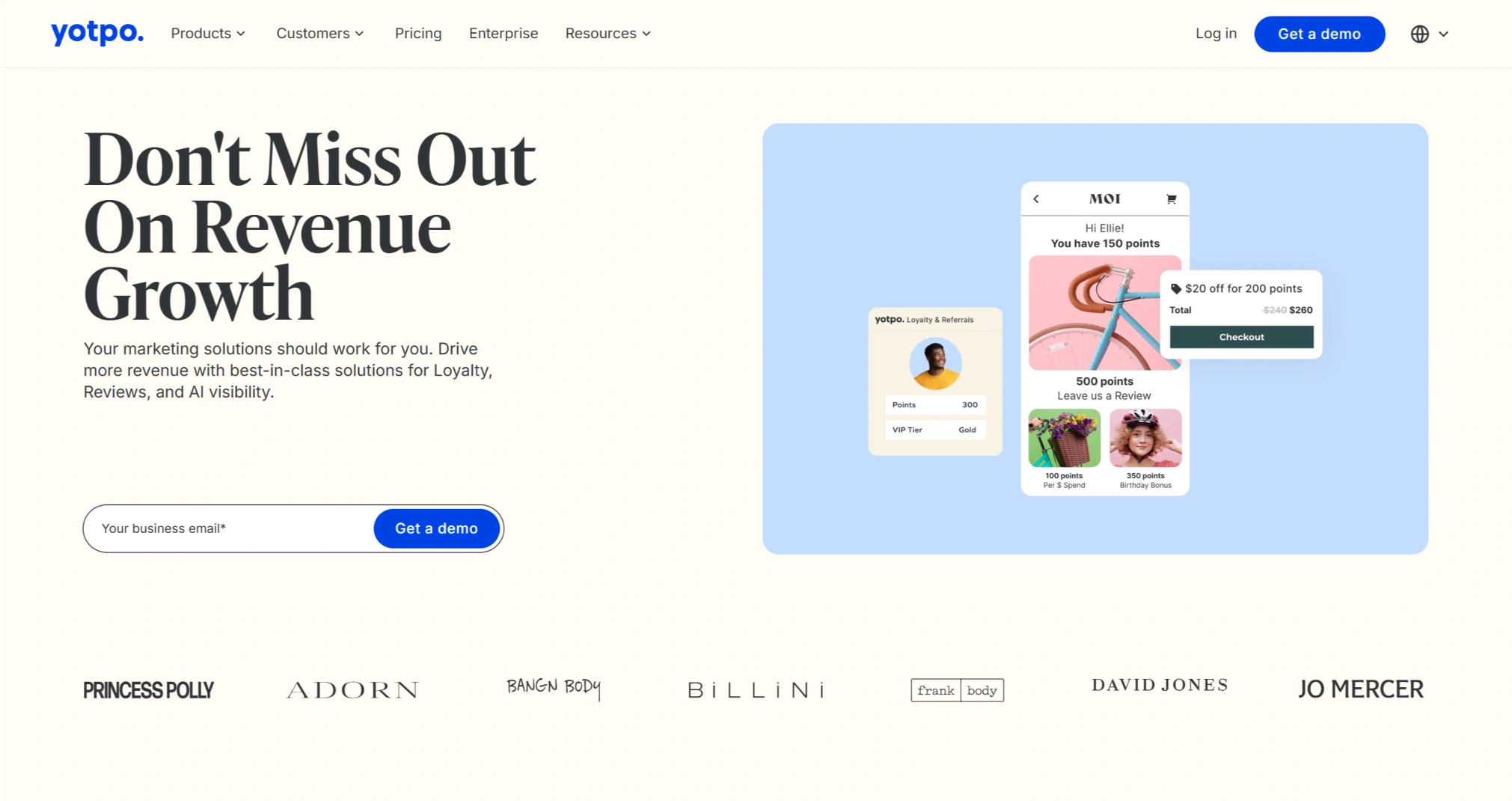
An ecommerce loyalty platform connects rewards with storefront activity so customers can earn and redeem within the shopping journey. Yotpo Loyalty offers this model with a particularly strong fit for Shopify brands.
Why it fits this use case
Yotpo suits ecommerce businesses that want loyalty activity connected with their storefront, checkout and marketing communications. It allows retailers to use purchase and engagement data to encourage repeat orders, recognize high-value customers and acquire customers through referrals.
Key loyalty capabilities
Yotpo supports configurable earning rules, points-based rewards, VIP tiers and referral campaigns. Customers can earn points for purchases, account creation, birthdays, social activity and product reviews.
Tier progression can be based on spending or points earned. Available rewards can include percentage discounts, fixed-value discounts, free shipping and free products. Reporting covers enrollments, redemptions, referrals and loyalty-attributed revenue.
Integrations and implementation
Yotpo connects with Shopify and Shopify POS, allowing customers to earn and redeem across online and physical Shopify stores. Integrations with platforms such as Klaviyo, Attentive and Gorgias allow points balances, tier status and referral information to inform email, SMS and customer-support interactions.
Businesses migrating from another loyalty rewards platform should confirm how existing customer records, points balances and tier status will be transferred.
Main tradeoffs
Yotpo’s strongest fit is commerce-led loyalty. Organizations operating outside ecommerce, using a bespoke commerce architecture or requiring one loyalty engine across numerous unrelated channels may find a headless or enterprise platform more appropriate.
Smile.io is a relevant alternative for Shopify brands comparing points, referrals, VIP programs, embedded storefront experiences and Shopify POS support.
PassKit: Best for Wallet-First Loyalty
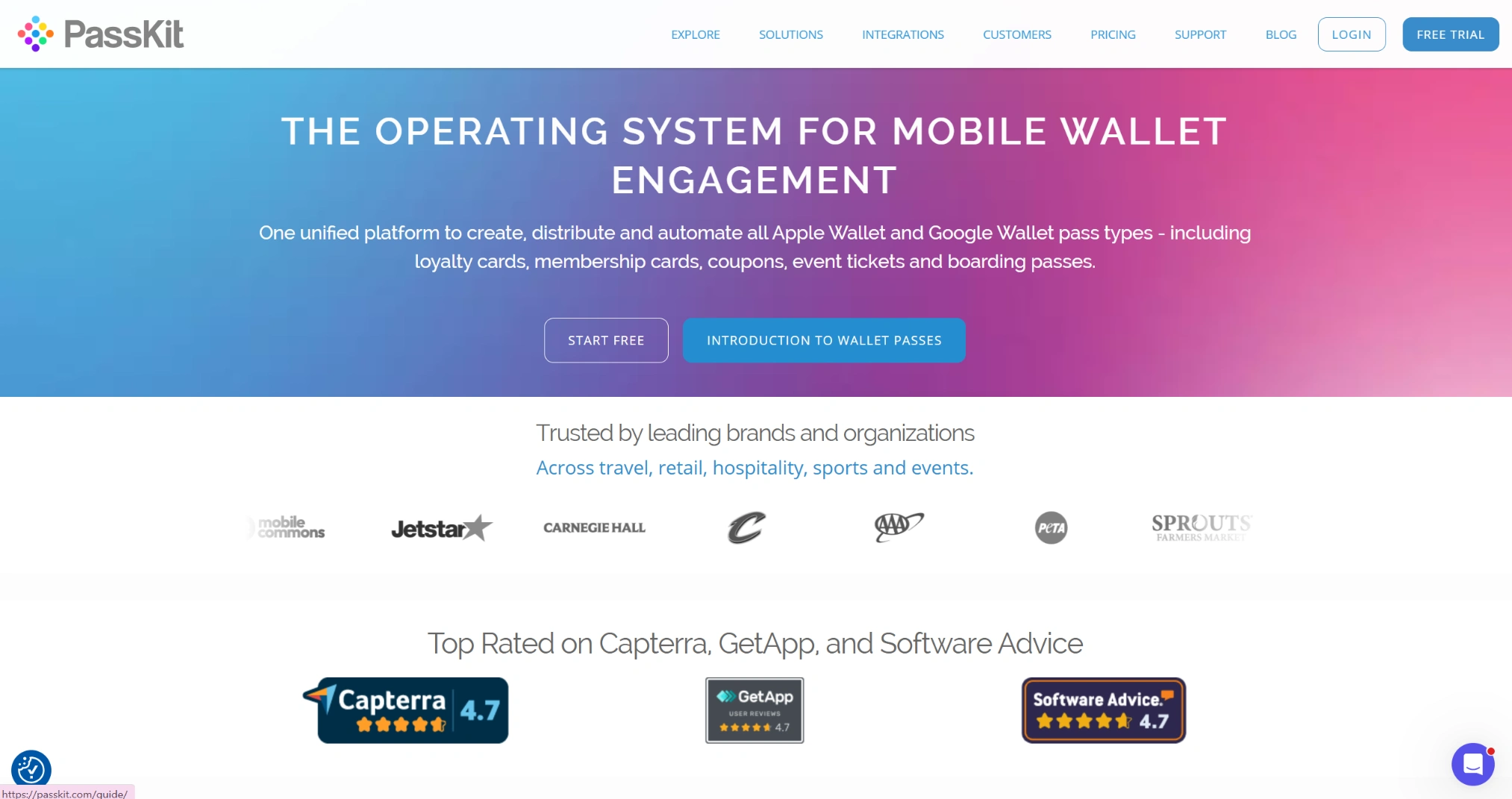
A wallet-first loyalty card platform delivers customer-facing cards and program information through Apple Wallet and Google Wallet. PassKit enables businesses to issue Apple Wallet loyalty cards, Google Wallet loyalty cards and digital membership cards without requiring customers to install a dedicated app.
Why it fits this use case
PassKit suits organizations that already have a system responsible for customer data and loyalty rules, or plan to build one, but need a reliable mobile-wallet layer.
It allows points, rewards, membership status and redemption information held in another system to remain visible and accessible on the customer’s phone. This is particularly useful for businesses modernizing physical cards or adding mobile-wallet delivery to an existing loyalty program.
Key loyalty capabilities
Passes can display points balances, tier status, available rewards, expiration dates and customer identifiers. Barcodes and QR codes can connect each pass with an in-store validation, identification or redemption process.
Businesses can issue passes individually or at scale and update them in place when points, tiers, rewards or customer data change. Pass lifecycle events such as issuance, installation, updates and removal can also be monitored.
Integrations and implementation
PassKit provides APIs, SDKs, webhooks and integrations for connecting wallet passes with CRMs, customer data platforms, POS systems, websites, mobile applications and loyalty systems. Zapier and Make can support simpler automations, while APIs provide greater control over custom implementations.
Before implementation, the business should identify its source of truth: the system that calculates points, determines reward eligibility and approves redemptions. PassKit can then receive that data and present the current information through the wallet pass.
Main tradeoffs
PassKit is a mobile-wallet platform rather than a complete enterprise loyalty engine. Complex earning rules, tier calculations, offer eligibility and reward liability may need to remain in an existing CRM, POS, ecommerce system or loyalty management platform.
Open Loyalty: Best for API-First and Headless Loyalty
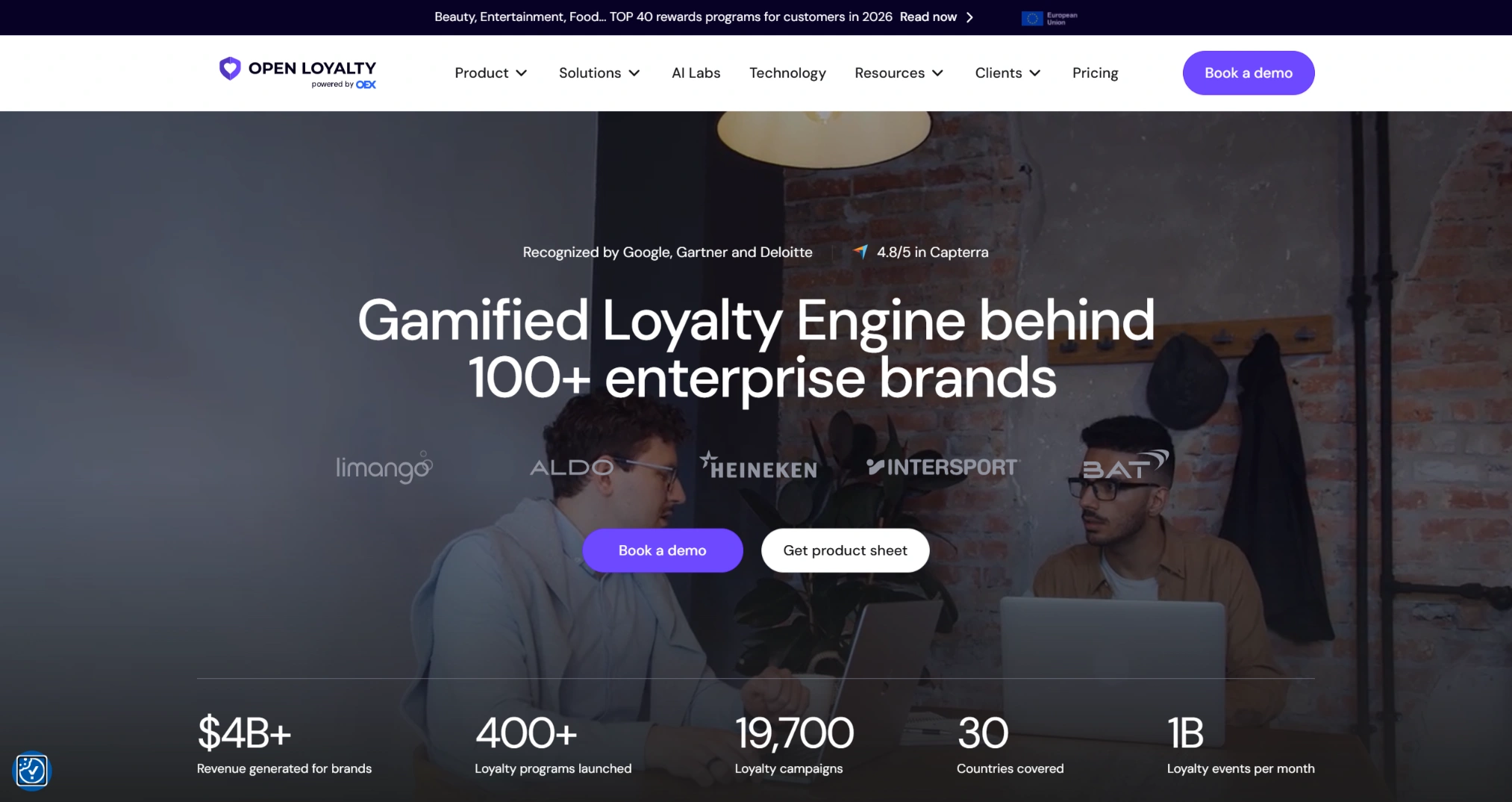
A headless loyalty platform separates program logic from the customer-facing experience. The loyalty engine processes member activity and reward rules, while the business controls how the program appears across its website, application, checkout and in-store interfaces.
Why it fits this use case
Open Loyalty suits technical and product teams that want a custom customer journey without building an entire loyalty management system internally.
It is most relevant when a business needs a white-label loyalty experience across several touchpoints or must fit loyalty into an existing composable technology stack.
Developers can connect one engine with web interfaces, mobile apps, POS systems and internal tools while maintaining centralized loyalty rules.
Key loyalty capabilities
Open Loyalty exposes member data, points, tiers, rewards, campaigns and redemption operations through its REST API. Its customer loyalty software supports configurable earning rules, reward catalogs, multiple point wallets, challenges and other gamification mechanics.
These components give businesses greater control than fixed-template loyalty program software while removing the need to develop the underlying rules engine from the beginning.
Integrations and implementation
REST APIs support real-time interactions, webhooks send loyalty events to connected systems, and scheduled exports can move data into warehouses or business-intelligence tools.
The architecture can connect loyalty activity with a CRM, CDP, ecommerce platform, marketing automation system or custom frontend. Implementation requires developers to build the customer-facing experience and determine how member identities, transactions and rewards will remain synchronized.
Main tradeoffs
Open Loyalty is not a ready-to-use loyalty app. Its flexibility creates additional responsibility for interface design, system integration, testing and ongoing technical ownership. It is best suited to organizations whose custom requirements justify those resources.
Talon.One: Best for Enterprise Loyalty and Promotion Management
Enterprise loyalty program software must coordinate points, rewards and promotional offers across regions, brands, currencies, stores, ecommerce sites and applications. Talon.One combines loyalty, promotions and gamification within a unified incentives engine.
Why it fits this use case
Talon.One suits global organizations that need consistent, real-time decisions about which reward, promotion or loyalty benefit a customer qualifies for.
It is particularly relevant when separate teams and systems currently manage discounts, loyalty benefits and promotional campaigns. Centralized rules and governance help prevent conflicting offers and inconsistent customer experiences across channels.
Key loyalty capabilities
Talon.One supports points, tiers, personalized promotions, referrals and gamified incentives. Its rules-based approach allows eligibility and reward outcomes to respond to customer attributes, transaction information, product data and contextual events.
For organizations comparing enterprise loyalty program vendors, its main distinction is the ability to coordinate promotional and loyalty logic within the same platform rather than operating separate systems for each incentive type.
Integrations and implementation
Talon.One is designed to exchange data with commerce platforms, customer data platforms, engagement tools, payment systems and business-intelligence software. Its technology partner ecosystem includes Braze, Shopify, commercetools, Segment and Salesforce Commerce Cloud.
Implementation requires customer identities, transaction data, promotional rules, channel behavior and governance permissions to be mapped across the organization. Buyers should determine which team will own the platform, how campaigns will be tested and how regional teams will share or separate program rules.
Main tradeoffs
The platform’s scope may be unnecessary for a single-location business or a straightforward points or stamp program. Enterprise implementation, governance and system integration also require more resources than out-of-the-box loyalty software.
Capillary Technologies is another enterprise alternative for organizations considering managed SaaS loyalty, omnichannel engagement, multi-brand programs, customer data capabilities and advanced analytics.
When a Coalition or Multi-Brand Loyalty Platform Makes Sense
A coalition loyalty platform allows customers to earn or redeem a shared loyalty currency across several participating businesses. Instead of operating isolated programs, the brands contribute to a partner network with common membership and reward rules.
This model is most relevant when the combined network provides customers with greater utility than any participating brand could offer independently. A travel coalition, for example, could connect airlines, hotels, retailers and financial-service partners, giving members more opportunities to earn and redeem rewards.
A coalition program differs from a multi-brand program operated by one corporate group. A company that owns several brands can establish governance internally. Independent coalition partners must agree on member ownership, data permissions, reward funding, points liability, partner settlement, fraud controls and the value assigned to earning and redemption activity.
Coalition loyalty can expand reward choice and increase the frequency with which customers interact with a program. However, every participating brand must exchange reliable data and follow shared technical, financial and privacy rules.
Kognitiv is a market example associated with coalition loyalty. It has powered Singapore’s Yuu Rewards Club, where members earn and redeem rewards across participating brands. Kognitiv has since become part of Capillary Technologies’ enterprise loyalty portfolio.
How to Choose a Loyalty Platform Provider
The best loyalty program software is the platform that supports your required program rules, integrations and customer channels without adding unnecessary complexity.
Define Your Program Requirements
List the mechanics you need, such as points, tiers, referrals, stamp cards, digital wallet passes, promotions or multi-brand rewards. Also record expected member numbers, locations, regions and currencies. Small businesses may need ready-to-use loyalty software, while larger organizations may require loyalty management software with stronger controls and scalability.
Check Loyalty Program Integration
Confirm whether the platform connects with your ecommerce platform, POS, CRM, CDP, marketing tools, mobile apps and digital wallets. Ask whether each loyalty program integration uses a native connector, API, webhook or manual data transfer.
When comparing retail loyalty software, test customer identification, refunds, points adjustments and balance updates when members earn online and redeem at the POS, or the reverse. Businesses replacing another platform should also confirm how existing members, points and tiers will be migrated.
Compare Loyalty Program Pricing
Request the total cost rather than comparing subscription prices alone. Loyalty program pricing may depend on members, transactions, orders, locations, API usage or messages.
Include setup, development, integrations, migration, training and support in your comparison. Also confirm what internal resources will be required to launch and manage the platform.
Review Loyalty Program Data and Reporting
Confirm who owns the loyalty program data and whether it can be exported. Reporting should cover active members, points earned and redeemed, reward liability, referral activity, purchase frequency and loyalty program redemption rates.
The most useful loyalty program KPIs depend on your goals, but the platform should provide enough information to measure engagement, customer retention and return on investment.
Test the Shortlist
Ask each provider to demonstrate enrollment, earning, redemption, refunds and reporting using the same scenarios. Use a trial or proof of concept when an essential integration must be verified before purchase.
Frequently Asked Questions About Loyalty Platform Providers
These answers address the technical, operational and financial questions businesses commonly consider before choosing a loyalty platform provider.
What is a third-party loyalty program?
A third-party loyalty program uses software or services supplied by an external loyalty program provider instead of technology built and operated entirely in-house. The business defines its program rules and member experience, while the provider supplies some or all of the software, integrations, hosting and support.
A third-party program is not necessarily a coalition program. It may operate exclusively for one business or brand.
Should you choose a SaaS or self-hosted loyalty platform?
A SaaS loyalty platform is hosted and maintained by the provider. It usually offers faster implementation, managed updates and less responsibility for infrastructure.
A self-hosted platform runs within infrastructure controlled by the business, providing greater control but requiring internal resources for security, maintenance and availability. Open source describes the software’s licensing and source-code availability rather than where it is hosted. Open-source loyalty software may be self-hosted or offered as a managed service.
Compare data residency, API access, customization, service commitments and total ownership cost before choosing.
How long does loyalty program software take to implement?
Ready-to-use loyalty software can often launch within days or weeks. A headless or enterprise loyalty platform may take several months when it requires data migration, custom interfaces, security reviews and multiple integrations.
The provider should supply a project plan based on your program rules, systems, customer volume and internal approval process.
How does loyalty program automation work?
Loyalty program automation turns customer events into predefined actions. A purchase can award points, a balance threshold can trigger a tier change and an approaching expiration date can trigger a reminder.
APIs, webhooks and native connectors move these events between the loyalty platform, POS, ecommerce system, CRM and marketing tools. The software should also prevent duplicate processing and retry failed updates.
How does customer loyalty software prevent fraud?
Customer loyalty software can use unique member identifiers, transaction validation, redemption limits, duplicate detection, referral controls, staff permissions and audit logs.
Some platforms also flag unusual earning, transfer or redemption patterns for review. Buyers should confirm how suspicious activity is detected, investigated and reversed without affecting legitimate customer balances.
How does loyalty software track points and reward liability?
Points liability represents the estimated financial value or cost of rewards that members have earned but not yet redeemed. Loyalty software should report points issued, redeemed, expired, adjusted and outstanding.
It may also help estimate breakage, which is the portion expected to expire unused. Finance teams can use this data to forecast reward costs and determine the appropriate accounting treatment.
How do loyalty programs make money and generate ROI?
For a business, a loyalty program generates financial value by increasing repeat purchases, purchase frequency, average order value and referrals while reducing customer churn.
ROI compares the incremental gross profit attributed to the program with the total cost of software, rewards, discounts, implementation and ongoing management. Control groups or comparable customer segments provide a more reliable measurement than attributing all member revenue to loyalty.
What should enterprise buyers ask about scalability and support?
Enterprise buyers should ask about peak transaction capacity, API limits, response times, uptime commitments, monitoring and failure recovery.
They should also confirm support hours, escalation procedures, data residency and support for multiple brands, regions and currencies. Critical performance and support commitments should be tested where possible and documented in a service-level agreement.
Does a loyalty program need its own app or website?
No. Loyalty program software can make points, rewards and membership information available through an existing ecommerce website, mobile app, customer account, POS interface or digital wallet.
A dedicated loyalty program app or website is only necessary when the business wants a separate branded member experience. The required customer interface should be established before choosing a platform.