
Gift Card Tracking Software for Businesses: What to Track
Gift card tracking software helps businesses monitor issuance, delivery, balances, redemption, liability and reporting across connected systems.

Gift card tracking software helps businesses monitor digital gift cards from issuance and delivery through activation, balance updates, redemption, reporting and reconciliation. Tracking data may come from a stored-value ledger, ecommerce or point-of-sale platform, distribution system and mobile-wallet service rather than one application.
This guide explains how digital gift card tracking software, sometimes called gift certificate tracking software, works for businesses and where PassKit fits as the mobile-wallet layer. It focuses on connecting lifecycle, transaction and performance data across business systems, rather than personal gift card organization, individual balance checks or retailer-specific support.
What Is Gift Card Tracking Software?
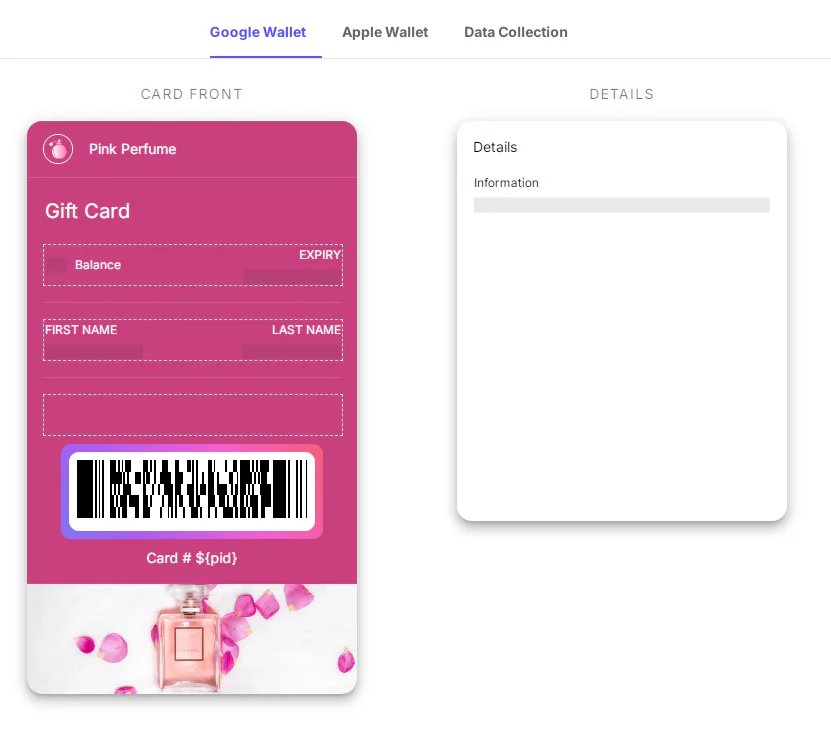
Gift card tracking software is technology businesses use to record and report the status, value and activity of digital gift cards throughout their lifecycle. Depending on the system and its integrations, it can track issuance, distribution, delivery, claiming, activation, balance changes, purchases, redemption, refunds, reversals and expiration.
The software can provide visibility into:
- Gift cards issued and their original value
- Delivery, claim and activation status
- Current balances and transaction history
- Full and partial redemptions
- Outstanding value, expiration and estimated liability
- Campaign performance, audit records and reconciliation
The same type of technology may also be described as gift certificate tracking software or a voucher tracking system. However, no single platform necessarily owns every data point. A stored-value ledger may control balances and transactions, while ecommerce and point-of-sale systems record purchases and redemptions. Distribution platforms track delivery, and mobile-wallet platforms track pass installation and updates. APIs and webhooks connect these systems so gift card activity can be synchronized and reported accurately.
Business Gift Card Tracking Software vs Personal Gift Card Tracker Apps
Business gift card tracking software monitors programs issued by a company, while personal tracker apps help individuals organize cards they own.
| Type | Primary purpose | Typical data |
|---|---|---|
| Business tracking software | Monitor digital gift card programs | Issuance, delivery, balances, transactions, redemption, liability and reporting |
| Personal tracker app | Organize gift cards someone owns | Card details, manually recorded balances, receipts and expiration dates |
Personal tracker apps generally rely on information entered by the owner and typically do not issue cards, process redemptions or maintain financial liability.
Gift Card Tracking Software vs Gift Card Management Software
Gift card tracking software and gift card management software overlap, but they are not identical. Tracking software records or reports card status, delivery, balance changes, transactions, redemptions and program performance. Management software may additionally create, fund, issue and distribute gift cards, configure redemption rules, control access and operate the wider program.
Tracking may be a feature within a management platform or a separate layer connected to a gift card ledger, ecommerce platform or point-of-sale system.
Read our guide to gift card management software for a broader explanation of program-management capabilities.
What Can Businesses Track With Digital Gift Cards?
Businesses can track a digital gift card from issuance through redemption or expiration. The available detail depends on which systems participate and whether their gift card identifiers are consistent or reliably mapped.
| Lifecycle stage | Data tracked | Typical source system | Why the data matters |
|---|---|---|---|
| Issuance and distribution | Gift card ID, initial value, issue date, campaign, recipient reference and distribution source | Gift card ledger or management platform | Establishes where the gift card came from and how much value was issued |
| Delivery, claim and activation | Sent, delivered, failed, opened, claimed, activated and installed in a mobile wallet | Distribution platform, gift card ledger and mobile-wallet platform | Separates successful delivery and access from actual usage |
| Balances and transactions | Original value, current balance, purchases, refunds, reversals and adjustments | Gift card ledger, ecommerce platform or POS | Maintains an accurate balance and transaction history |
| Redemption | Date, amount, remaining balance, channel, location and transaction reference | Ecommerce, POS or redemption system | Shows when, where and how gift card value was used |
| Expiration and liability | Outstanding value, expiration dates, expired value and estimated breakage | Gift card ledger and reporting system | Supports reconciliation and financial planning |
| Fraud and auditing | Failed validation, duplicate attempts, staff activity and balance changes | Security controls and audit logs | Supports investigation and accountability |
Gift Card Issuance and Distribution
Tracking begins when the system assigns a unique identifier to a digital gift card. The issuance record should include its initial value, issue date, campaign or batch, recipient or customer reference, distribution source and current status.
This information allows businesses to connect each card with the campaign, order or workflow that created it. For digital programs, gift card inventory management means knowing how many cards have been issued and whether they are pending, active, redeemed, canceled or expired, rather than counting physical stock.
Delivery, Claim and Activation Status
Distribution systems can record whether a digital gift card was sent, delivered, opened or claimed, or whether delivery failed. The gift card ledger may record activation, while a mobile-wallet platform records whether the pass was installed, updated or removed.
Each event should retain its own timestamp and status because it represents a different stage of the digital gift card lifecycle. Tracking failed and unclaimed deliveries allows teams to correct recipient information, retry delivery through the relevant distribution system and investigate gift cards that never progress to redemption.
Delivery Is Not Redemption
Although providers may use slightly different labels, these events should not be treated as interchangeable:
- Sent: The gift card was submitted to the delivery channel.
- Delivered: The delivery platform reported that the message reached or was accepted by the destination.
- Claimed: The recipient accessed or accepted the gift card.
- Activated: The stored value became available for use.
- Installed in a mobile wallet: The digital gift card was saved to a supported mobile wallet.
- Redeemed: Some or all of the gift card value was used in a transaction.
Delivery, claiming, activation and wallet installation indicate progress through the lifecycle. Only redemption confirms that value was used.
Balance and Transaction History
The financial source of truth normally supplies the original value, current balance and complete gift card transaction history. Depending on the program, that history may include the initial purchase or value load, partial and full redemptions, refunds, reversals, reloads and manual adjustments.
Gift card purchases can be tracked when the sale is connected to a unique card ID and order reference. Reporting should distinguish between the original purchase of the gift card and later purchases made using its value.
Gift card balance tracking software should receive the current balance from the stored-value ledger. A website, application or mobile-wallet pass can display that balance, but it should not calculate the monetary value independently.
Redemption and Usage
A redemption record can include the date and time, amount redeemed, remaining balance, online or in-store channel, store location, order reference and transaction status. It may also indicate whether the redemption was approved, declined, refunded or reversed.
For a digital voucher program, redemption tracking depends on the ecommerce, POS or validation system returning each event to the source ledger. Real-time voucher redemption tracking is only possible when those connected systems exchange data as transactions occur.
Full and Partial Redemption
A partial redemption deducts part of the available value and leaves the remaining balance active. A full redemption uses the complete available balance and normally changes the gift card status to redeemed.
A refund may restore value if the program rules allow it. A reversal cancels a previous redemption and should remain linked to the original transaction so the balance and audit history stay accurate.
Expiration, Liability and Breakage
Tracking software can report valid gift cards approaching expiration, outstanding balances, expired value and the total unredeemed value across a program. These figures help finance and operations teams understand the value that remains available to customers.
Gift card liability represents the business’s outstanding obligation associated with unredeemed value. Breakage is the portion of issued value estimated to remain unused. The software can provide the underlying records and reports, but the business and its finance team must determine the appropriate accounting treatment.
Fraud Monitoring and Audit Trails
Gift card tracking can support fraud detection by identifying duplicate redemption attempts, repeated validation failures, unusual redemption patterns and unexpected manual balance changes. It cannot prevent every fraudulent event, so these signals should support defined review and investigation procedures.
Audit trails should record the date, action, transaction reference, staff account and previous and updated values. Role-based permissions can restrict who may issue cards, adjust balances or reverse transactions. Businesses should also limit access to complete gift card numbers, redemption codes and other sensitive data.
How Digital Gift Card Tracking Works
Digital gift card tracking works by assigning each gift card a consistent identifier and exchanging events between the systems that issue, deliver, display, redeem and report on it. The gift card ledger normally acts as the financial source of truth, while connected systems provide delivery, transaction, wallet and reporting data. APIs, webhooks and data exports keep these records synchronized.
| System | Primary responsibility |
|---|---|
| Gift card ledger | Stores value, maintains balances and records financial transactions |
| Ecommerce or POS | Captures purchases, redemptions, refunds and order or channel information |
| Distribution platform | Sends digital gift cards and records delivery, failure and claim status |
| Mobile-wallet platform | Issues wallet passes and records installation, updates and removal |
| Reporting system | Combines data for analytics, exports and reconciliation |
A business may not need five separate platforms because one provider can perform several roles. What matters is assigning ownership for each data point and using consistent or reliably mapped gift card, event and transaction identifiers across connected systems.
Gift Card Ledgers, Ecommerce and POS Systems
The gift card ledger is the financial source of truth. It maintains stored value and the authoritative transaction history. Ecommerce and POS systems submit purchase, redemption, refund and reversal events, which the ledger validates before returning the updated balance. Tracking gift card balances and redemptions across online and in-store channels depends on consistent or reliably mapped card identifiers and every channel displaying the ledger-supplied balance.
Distribution Platforms and Mobile Wallets
Distribution platforms provide digital gift card delivery tracking, including sending, delivery failures and claims. Mobile-wallet platforms separately record pass installation, updates and removal. Financial redemption remains a distinct event that must update the gift card ledger.
APIs, Webhooks and Data Exports
Gift card API tools can retrieve and update balances, statuses and other gift card data, while webhooks send lifecycle and redemption events as they occur. Unique event and transaction IDs support idempotent processing so repeated events do not update a balance twice. Retry handling and monitoring should identify missing, delayed or rejected events. Scheduled exports support gift card reconciliation, analytics and audit requirements.
Gift Card Analytics and Reporting
Gift card analytics should separate delivery and claim activity, redemption behavior, financial position and campaign performance because each dataset answers a different operational or commercial question.
Delivery and Claim Metrics
Delivery reporting can show delivery rate, failed delivery rate, claim rate, mobile-wallet installation rate and the average time from issuance to delivery or from delivery to claim. The distribution platform normally supplies sending, delivery and claim data, while the mobile-wallet platform supplies installation data. Each rate should use a documented denominator so results remain comparable across campaigns and reporting periods.
Redemption Metrics
Gift card usage analytics should include time to first redemption, average value redeemed, full versus partial redemption and redemption by channel, store or location.
Time to first redemption can reveal how quickly recipients begin using issued value. Fiserv’s Q4 2025 Gift Card Gauge, based on a survey of more than 1,000 U.S. adults, found that 63% reported using gift cards within one month.
Businesses should measure both card-based and value-based redemption:
- Card redemption rate: Cards with at least one redemption divided by cards issued or activated, multiplied by 100.
- Value redemption rate: Gift card value redeemed divided by value issued, multiplied by 100.
A partially redeemed card counts as redeemed in the first calculation while still carrying an outstanding balance. Measuring both rates therefore provides a more complete view of program usage.
Financial Reporting, Liability and Reconciliation
Gift card reporting software should show total value issued, total value redeemed, outstanding gift card value, unredeemed liability, expired value and estimated breakage, where calculated. Reports should also identify refunds, reversals, balance discrepancies and reconciliation differences between the ledger and connected sales channels.
Accounting and reporting exports should include transaction dates, values, statuses and references needed to investigate discrepancies. Tracking software supplies the underlying records, while the business and its finance team determine the appropriate accounting treatment.
Campaign and Recipient Performance
Gift card program analytics can segment results by campaign, distribution source, recipient group and issuance cohort. Businesses can compare customer and employee rewards using delivery, redemption, average time to redeem and outstanding value.
Incremental revenue should only be reported when it can be measured against a reliable baseline, comparison group or attribution method. Revenue from gift card recipients should not automatically be attributed to the campaign.
Common Digital Gift Card Tracking Use Cases
Digital gift card tracking requirements depend on why cards are issued, who receives them and whether redemption occurs online, in stores or across both channels.
| Use case | What businesses need to track |
|---|---|
| Customer rewards and promotions | Issuance, delivery, claims, redemption and campaign performance |
| Employee and bulk distribution | Recipient reference, allowance, delivery, claims, redemption and remaining value |
| Ecommerce and omnichannel gift cards | Online purchase, wallet installation, online or in-store redemption and cross-channel balance updates |
Customer marketing and digital incentive campaign tracking prioritize campaign attribution and redemption performance. Employee gift card tracking and bulk gift card reporting require recipient-level delivery, allowance and remaining-value data. Omnichannel programs require balances and transaction records to remain consistent across ecommerce and POS systems so cards work reliably in either channel.
How to Choose Gift Card Tracking Software
The right gift card tracking system or voucher tracking system must capture the required events, connect with the existing technology stack and provide reliable access to the underlying data.
Define Tracking Requirements and the Source of Truth
List the lifecycle events and sales data that must be captured online and at the POS. Identify which system controls stored value, owns the authoritative transaction history and sends balance updates. Record the team responsible for reconciliation and any multi-brand, regional or currency requirements. Before comparing providers, create a data-ownership map showing where each event and field originates and which system is authoritative.
Review Integrations, Reporting and Data Access
Review native POS and ecommerce integrations, APIs, webhooks, real-time and historical reporting, custom reports, data exports, data ownership and retention, and system limits. Confirm whether each connection is native, custom or dependent on manual transfers. API documentation should explain authentication, usage limits, retry handling and failures, while gift card reporting software should provide both dashboards and exportable underlying data.
Test Important Gift Card Scenarios
Use the same test script for every provider. Include:
- Failed delivery
- Partial and full redemption
- Online-to-store redemption
- Refunds and reversals
- Duplicate events and failed integrations
- Expiration and manual balance adjustments
After each scenario, verify the resulting balance, status, audit record and report. Consistent testing reveals actual system behavior and makes comparisons fairer.
Review Security and Fraud Controls
Review staff permissions, audit logs, redemption limits, duplicate detection, sensitive-code protection, unusual-activity alerts, data retention and reversal procedures. Evaluate gift card fraud monitoring by confirming who can adjust stored value, how suspicious activity is escalated, what evidence is retained and how unauthorized transactions are investigated or reversed where supported.
How PassKit Fits Into Digital Gift Card Tracking
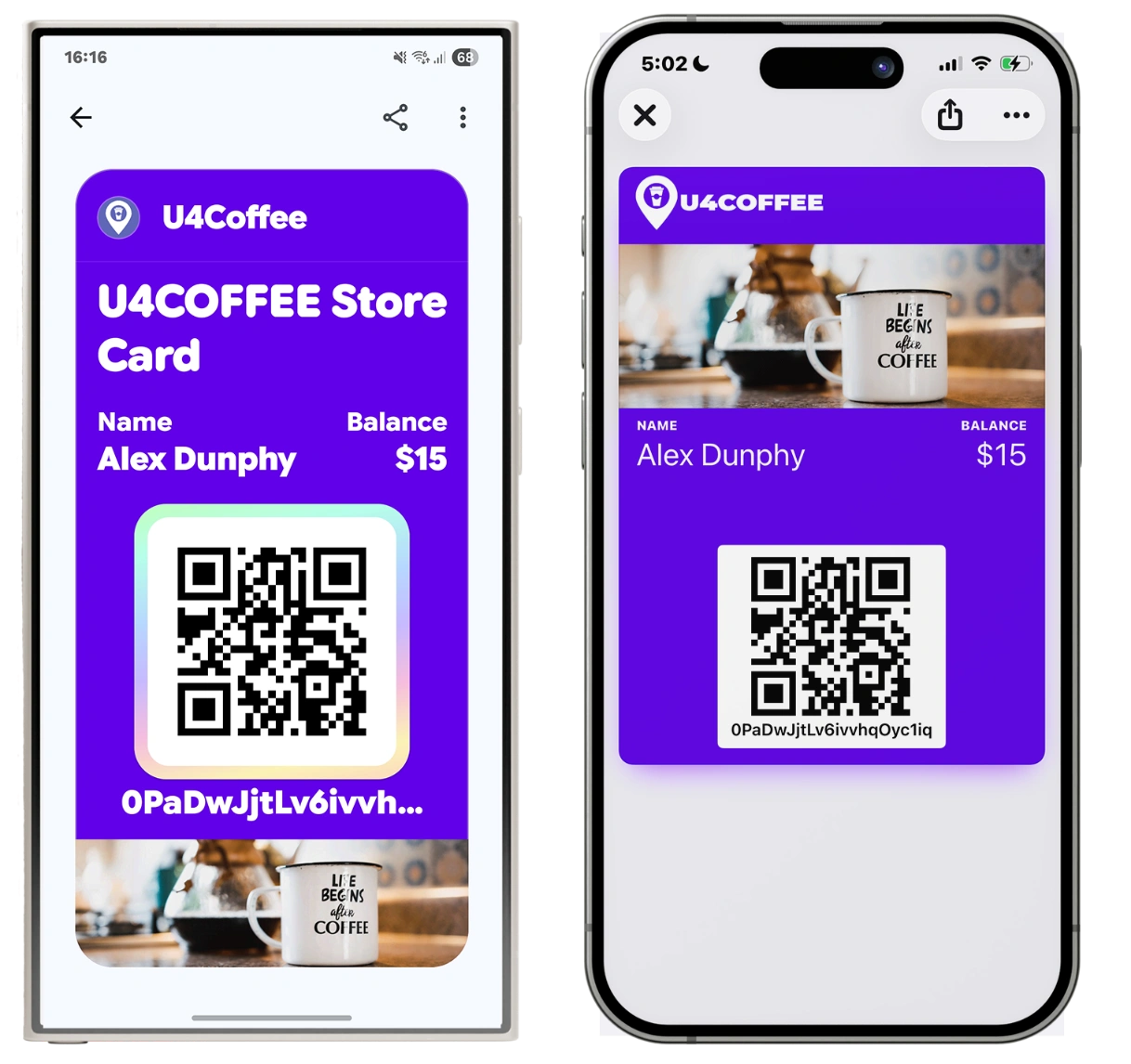
PassKit provides the mobile-wallet delivery and engagement layer for digital gift cards. It is best suited to businesses with an existing gift card, POS, ecommerce or stored-value system that want branded Apple Wallet and Google Wallet passes.
Businesses can deliver real-time pass updates and monitor pass issuance, wallet installation, uninstallation and distribution source, while the connected source system remains responsible for balances, financial transactions and gift card liability.
PassKit and Source-System Responsibilities
PassKit works alongside the source system and any service used to distribute digital gift cards by email or SMS.
| System | Primary tracking responsibility |
|---|---|
| PassKit | Pass creation and issuance, wallet installation, pass updates and uninstallation status, wallet type, device and browser information where available, UTM-tagged distribution source, and scan or validation activity through supported workflows |
| Gift card source system | Monetary balance, purchases, redemptions, refunds, reversals, expiration, liability, transaction history, reconciliation, fraud investigation and fraud decisions |
| Email or SMS distribution platform | Message sending, delivery, failure and opening status, where supported |
Pass issuance confirms that a pass record was created, not that an email or SMS reached the recipient. Wallet installation confirms that the gift card was saved, not that its value was redeemed. PassKit displays balance and status information supplied by the source system rather than calculating or controlling the underlying monetary value.
How the PassKit Integration Works
A typical integration follows six steps:
- The source system creates and maintains the gift card account.
- PassKit creates the corresponding mobile-wallet pass.
- The pass displays current information in Apple Wallet or Google Wallet.
- APIs update the pass when balances or statuses change.
- Webhooks return pass creation, installation, update and uninstallation events.
- The redemption system processes the transaction and updates the financial ledger.
Connected reporting tools can combine PassKit’s wallet lifecycle data with financial records when required, but complete financial reporting depends on integrations that supply authoritative balance and transaction data.
Mobile-Wallet Analytics for Digital Gift Cards
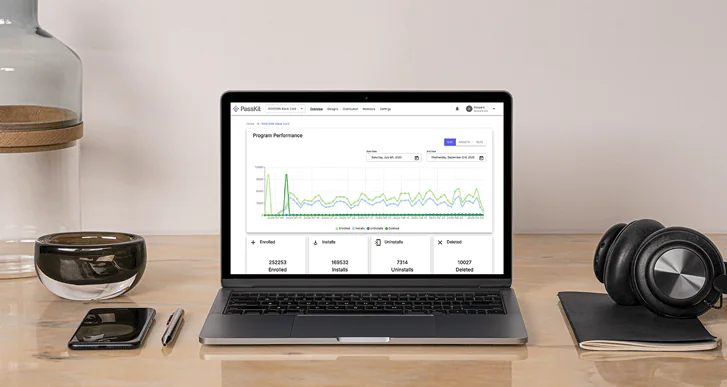
PassKit lifecycle data can be converted into mobile-wallet adoption and engagement metrics. Businesses can calculate installation rate, average time from issuance to installation, uninstallation rate and performance by UTM-tagged distribution source. These metrics show where recipients drop off between issuance, installation and continued wallet use.
When joined with redemption records from the connected system, businesses can compare installed-pass cohorts by time to first redemption, value redemption rate and outstanding value. These analyses help identify which campaigns and distribution sources produce the strongest digital gift card engagement.
Frequently Asked Questions About Gift Card Tracking Software
Can businesses track which employees or recipients redeemed their gift cards?
Yes, when each card is linked to a recipient reference and the redemption system returns a transaction event. If cards can be transferred, the system may confirm which card was redeemed without proving the identity of the person who used it.
Can gift card tracking software alert teams when allowances are exceeded?
Yes, if the source system supports limits by employee, team, manager or campaign. Alerts can flag approaching or exceeded allowances, but the stored-value or funding system must enforce the limit because a notification alone cannot block a transaction.
Can an undelivered or unclaimed digital gift card be canceled or replaced?
Sometimes. The source system may allow an unclaimed card to be canceled and replaced, while the distribution platform may permit redelivery. The business should verify that no value was redeemed and preserve links between the original and replacement records.
How should businesses resolve balance discrepancies between connected gift card systems?
The stored-value ledger should remain authoritative. Teams should compare card, event and transaction identifiers, then inspect gift card API and webhook logs for missing, duplicate, delayed or rejected updates before making a controlled correction that preserves the audit trail.
Can gift card tracking data connect with CRM, accounting or business intelligence platforms?
Yes. Native connectors, APIs, webhooks and scheduled exports can send gift card data to CRM, accounting and business intelligence platforms. The integration should preserve identifiers, timestamps, currencies and statuses so reports can be reconciled with the source ledger.
Can businesses track bulk gift card distribution across regions or currencies?
Yes, when the distribution platform and source ledger preserve recipient, batch, currency and delivery data for each market. Reports should separate issued value, redemption and outstanding balances by currency while retaining a common campaign or order reference.
Conclusion
Reliable gift card tracking starts with a clear financial source of truth and synchronized delivery, wallet and redemption data.
PassKit adds branded Apple Wallet and Google Wallet passes, real-time updates and wallet lifecycle tracking to that connected system. See how PassKit can extend your existing gift card program into mobile wallets.