
Pharmacy Loyalty Programs: How They Work, Rewards and Examples
Learn how pharmacy loyalty programs handle eligible purchases, points, redemptions and privacy, with examples from CVS, Walgreens and Boots.

Pharmacy loyalty programs reward customers for eligible purchases and help pharmacies build relationships beyond individual transactions. Members may receive points, discounts, exclusive prices or other benefits when they shop.
However, pharmacy loyalty works differently from ordinary retail loyalty.
A pharmacy sells everyday products alongside prescription medicines and healthcare services. While a discount on shampoo may follow standard retail rules, incentives connected to prescriptions can involve additional legal, insurance and privacy requirements.
For pharmacy owners, the important questions are what customers can earn rewards on, how purchases are recorded, how rewards are redeemed and which systems are needed to operate the program.
This guide explains how pharmacy loyalty programs work, using real examples from CVS, Walgreens and Boots. It also covers practical considerations for independent pharmacies and where digital loyalty cards fit into the process.
How do pharmacy loyalty programs work?
A pharmacy loyalty program links a customer’s membership account to eligible purchases and applies defined earning and redemption rules. Customers enroll, identify themselves at checkout and receive benefits only when the transaction meets the program’s conditions.
A typical program follows six stages:
| Stage | What happens |
|---|---|
| Enrollment | A customer joins and receives a membership account or loyalty identifier. |
| Identification | The customer provides a phone number, membership card or digital credential at checkout. |
| Purchase eligibility | The pharmacy determines which items or activities qualify under its reward rules. |
| Reward calculation | Eligible purchases generate points, discounts or other defined benefits. |
| Balance update | The loyalty system records the customer’s new reward balance or entitlement. |
| Redemption | Customers use available rewards on permitted products or services, subject to the program’s conditions. |
One retail platform may handle every stage, or the pharmacy may connect several systems. For example, the POS can record the transaction, loyalty software can apply the reward rules and a digital card can display the customer’s identifier or updated balance. Identifying the customer is different from recording an eligible purchase.
Example: How pharmacy loyalty works at checkout
Imagine a pharmacy that awards one point for every dollar spent on eligible retail products. A customer purchases:
- Sunscreen and skincare products: $25
- Vitamins: $10
- Prescription medication: $20
The pharmacy has approved the sunscreen, skincare and vitamins for rewards but excludes prescription purchases. After the customer presents a loyalty card, the POS identifies $35 of eligible spending and the loyalty system awards 35 points. The $20 prescription charge does not contribute to the calculation.
If the customer has a connected digital loyalty card, the updated points balance can be reflected on that card.
When the customer later qualifies for a reward, the pharmacy verifies that the reward is available and applies it to an eligible purchase. The loyalty system records the redemption, updates the remaining balance and passes the updated information to any connected digital card.
This example is illustrative, not a universal pharmacy reward rule. Actual eligibility depends on the pharmacy’s policies and applicable requirements.
Which pharmacy purchases can earn loyalty rewards?
Pharmacies need clearly defined earning and redemption rules because retail products, medicines and healthcare services may be treated differently.
| Purchase or activity | Typical loyalty treatment | What to check |
|---|---|---|
| Beauty, skincare and household products | Commonly eligible for retail points or discounts | Product exclusions and promotion terms |
| Vitamins and supplements | Often eligible | Local rules and specific product restrictions |
| Over-the-counter medicines | May qualify for rewards | Applicable medicine-promotion rules and program exclusions |
| Prescription medicines | Subject to additional restrictions | Jurisdiction, payer, patient eligibility and program conditions |
| Vaccinations and healthcare services | Rules vary by service and location | Healthcare incentive and reimbursement requirements |
| Prescription transfers | Require particular care | Restrictions on incentives intended to influence pharmacy selection |
Earning and redemption should be configured separately. A transaction might generate rewards while the same product remains excluded from reward redemption.
Can pharmacies offer rewards on prescriptions?
Sometimes, but prescription rewards require more careful evaluation than ordinary retail discounts.
In the United States, incentives involving federally reimbursed healthcare services can raise questions under the federal Anti-Kickback Statute and beneficiary inducement rules. State requirements and individual program conditions may add further restrictions.
These rules do not create a universal prohibition on every prescription-related reward. Eligibility depends on the arrangement, jurisdiction, payer, patient and transaction. Major US pharmacy chains offer qualifying prescription-related rewards in permitted locations while excluding other transactions or jurisdictions.
The US Department of Health and Human Services Office of Inspector General explains relevant federal fraud-and-abuse considerations.
Pharmacies should have proposed earning and redemption rules reviewed for every jurisdiction and healthcare program in which they operate. A cautious starting point is to keep ordinary retail rewards separate from prescription activity until the applicable requirements are confirmed.
Pharmacy loyalty program examples
Major pharmacy chains show how retail and prescription-related reward rules can coexist without treating every transaction identically.
| Program | Retail reward model | Prescription treatment |
|---|---|---|
| CVS ExtraCare | 2% back on qualifying purchases | Separate pharmacy reward arrangements with eligibility restrictions |
| myWalgreens | Walgreens Cash on qualifying purchases | Certain prescription-related transactions qualify, subject to restrictions |
| Boots Advantage Card | Points on qualifying purchases | Prescription items are generally excluded |
CVS ExtraCare: Retail rewards with separate pharmacy benefits
CVS ExtraCare members earn 2% back in ExtraBucks Rewards on qualifying retail purchases. Prescriptions are excluded from that standard calculation. CVS operates a separate pharmacy reward arrangement with location, prescription-category and enrollment restrictions, and pharmacy rewards require a specific privacy authorization.
What pharmacies can learn: One customer relationship can support separate rules for ordinary retail purchases and regulated pharmacy activity. The retail reward formula should not be assumed to apply to prescriptions.
Operators need a process for keeping pharmacy enrollment and privacy conditions separate from ordinary retail membership.
See the official CVS ExtraCare terms.
myWalgreens: Rewards across eligible store purchases
myWalgreens members generally earn 1% Walgreens Cash on eligible purchases and 5% on qualifying Walgreens-brand products. In permitted circumstances, qualifying out-of-pocket prescription spending can also earn rewards. Prescription eligibility varies by location and transaction, and Walgreens Cash cannot be redeemed toward prescription purchases or other excluded pharmacy items and services.
What pharmacies can learn: Earning and redemption are separate decisions. A transaction that contributes to a balance does not automatically become eligible for reward payment.
Location and transaction exclusions should be configured before the program calculates or displays an available reward.
See the official myWalgreens program information.
Boots Advantage Card: Points on qualifying retail products
Boots Advantage Card members receive three points for every £1 spent on qualifying purchases, with different rates applying to certain products and services. Prescription items and specified pharmacy-related purchases are excluded from standard point collection. Boots also restricts the products and services that members can buy with accumulated points.
What pharmacies can learn: A pharmacy can operate a substantial retail loyalty program while keeping prescription and other healthcare transactions outside its standard earning and redemption rules.
See the Boots Advantage Card terms and conditions.
Program rates, exclusions and promotional conditions can change, so pharmacies should verify current terms before using another company’s model as a reference.
Pharmacy loyalty programs vs. prescription discount programs
A pharmacy loyalty program rewards qualifying purchases or membership activity. A prescription discount card instead provides access to a negotiated or promotional medication price. Insurance benefits determine coverage and patient payment obligations under an insurance plan, while manufacturer assistance programs apply their own product and eligibility rules.
These arrangements are not interchangeable and may not be combinable. For example, a customer could use a prescription discount card to receive a particular medication price without earning retail loyalty points. The same customer might earn points on skincare products without reducing a prescription copayment.
Pharmacies should explain which benefit is being applied, what eligibility conditions govern it and whether it can be combined with insurance, discounts or other assistance.
What type of pharmacy loyalty program works best?
The appropriate model depends on the pharmacy’s retail offering, customer habits and ability to operate the program accurately.
| Program model | Best suited to | Main consideration |
|---|---|---|
| Retail points | Encouraging repeat purchases of eligible products | Requires accurate balances, redemptions and refund handling |
| Member-only prices | Providing immediate savings on qualifying purchases | Requires consistent pricing and eligibility rules |
| Membership benefits without points | Offering straightforward eligible perks and conveniences | Benefits must be clearly defined and comply with applicable requirements |
Which model should an independent pharmacy choose?
Smaller pharmacies generally benefit from a simple model with clearly defined eligible retail products and an earning, price or benefit rule that staff can explain quickly. The checkout process must reliably identify members, apply exclusions and handle refunds or corrections.
A pharmacy can expand the program after confirming that customers understand the benefit and staff can operate it consistently. Complexity should be added only when it serves a measurable retail objective and the pharmacy has the systems and procedures to support it.
How to set up a pharmacy loyalty program
Launching a pharmacy rewards program starts with rules and operating procedures, not card design.

1. Define eligible products and reward rules
Set a measurable retail objective, such as encouraging repeat purchases of eligible personal care products. Define which product categories generate rewards, which purchases are excluded and where customers can redeem their benefits.
Document what happens when a basket contains both eligible and excluded items. Establish refund, expiration and correction rules before launch. Prescription-related incentives should remain separate until the pharmacy has confirmed the applicable legal, payer and program requirements.
Record the reward value, limits, expiration conditions and promotional exclusions so staff and systems apply the same rules consistently.
2. Decide how purchases and rewards will be recorded
Determine which system owns the reward calculation and balance. A connected POS may associate qualifying transactions with a customer account, while a smaller pharmacy might use a supported staff-operated process.
Scanning a card or entering a phone number identifies the customer; it does not by itself prove that an eligible purchase occurred. The POS, loyalty software or authorized workflow must record qualifying activity, calculate the reward and update redemption history.
Use one authoritative reward balance. Refunds should reverse the relevant earning event, and a recovered connection should not create duplicate points.
3. Establish enrollment and privacy procedures
Collect only the information needed for the intended loyalty experience, such as a customer identifier and appropriate contact details. Define how customers consent to program terms and marketing communications.
A retail loyalty scheme does not automatically need prescription histories, diagnoses or other sensitive health information. If healthcare data will be used, the pharmacy should review the required permissions, vendor responsibilities and privacy controls. The dedicated privacy section below explains this distinction further.
4. Test the program and train staff
Test the situations most likely to produce incorrect balances or customer disputes:
- A basket containing eligible retail items and an excluded prescription.
- A refunded transaction that previously generated points.
- An attempted duplicate redemption.
- An expired or replaced membership credential.
- A transaction processed while a connected system is unavailable.
Staff should know how to identify members, explain exclusions, correct common errors and escalate uncertain prescription-related questions. Customer instructions should state how to join, earn and redeem benefits in plain language.
Use the same tills, scanners and staff roles expected in normal operations, and confirm that receipts and customer-facing balances agree.

How should pharmacy loyalty programs handle customer privacy?
Pharmacies should separate the information needed for retail loyalty from the more sensitive information used to provide healthcare services. A loyalty platform may need a customer identifier and points balance without receiving medication names, diagnoses or prescription histories.
Where systems are connected, the pharmacy should document what each provider is authorized and required to process.
That review should map the data flowing from enrollment and checkout to the loyalty record and customer-facing card. Access should be limited to the people and services that need it, with retention and deletion procedures appropriate to the information involved. Vendor security features do not replace the pharmacy’s responsibility to configure and govern the workflow correctly.
Retail marketing and prescription communications are different
Under the US HIPAA Privacy Rule, using protected health information for marketing generally requires patient authorization unless an exception applies. Certain treatment communications and qualifying prescription refill reminders are excluded from the HIPAA definition of marketing.
That distinction does not make every medication, wellness or pharmacy promotion automatically permissible. A reminder concerning an existing prescription and an advertisement selected from a patient’s medical history can be treated differently.
The HHS guidance on HIPAA and marketing explains these categories. Requirements vary outside the United States, so pharmacies should review local obligations, customer permissions and vendor responsibilities before connecting healthcare records to marketing or loyalty tools.
Keep digital loyalty credentials focused
A customer-facing digital loyalty credential should generally contain only the information required for its intended use, such as:
- A membership identifier.
- A scannable barcode or QR code.
- A supported retail rewards balance.
- Relevant non-sensitive membership information.
Medication names, medical conditions and other sensitive details should not be added merely for personalization. Pharmacies should decide which information belongs in healthcare systems and which is appropriate for a visible loyalty credential.
How can pharmacies measure loyalty program performance?
The available measurements depend on which system records each activity. A card platform can report issuance or wallet installations, a POS can record purchases and a loyalty system can maintain points and redemptions.
| Metric | What it helps evaluate |
|---|---|
| Enrolled members | How many customers have joined |
| Active members | How many members complete qualifying activity within a defined period |
| Repeat retail purchase rate | Whether participating customers return for eligible purchases |
| Reward redemption rate | Whether members use the benefits they earn |
| Eligible basket value | The value of qualifying retail purchases |
| Reward cost | The financial cost of the benefits provided |
Card issuance and installation do not establish that a customer made a purchase. Likewise, scanning a loyalty identifier does not necessarily prove that the transaction qualified for rewards.
Participation also does not prove incremental sales because customers may have bought the same products without the program. Pharmacies can investigate impact by comparing appropriate periods or groups while accounting for other changes.
Define each metric before reporting it. For example, an active member might mean someone who completed an eligible retail purchase within 90 days, while redemption rate could measure redeemed rewards against rewards issued. Consistent definitions make comparisons over time more useful and prevent card installations from being reported as customer activity.
Loyalty activity cannot establish prescription collection or medication adherence. Those outcomes require separate, appropriately governed records and analysis. Each metric should therefore be connected to a specific decision the pharmacy can make.
Where digital loyalty cards and PassKit fit into pharmacy loyalty
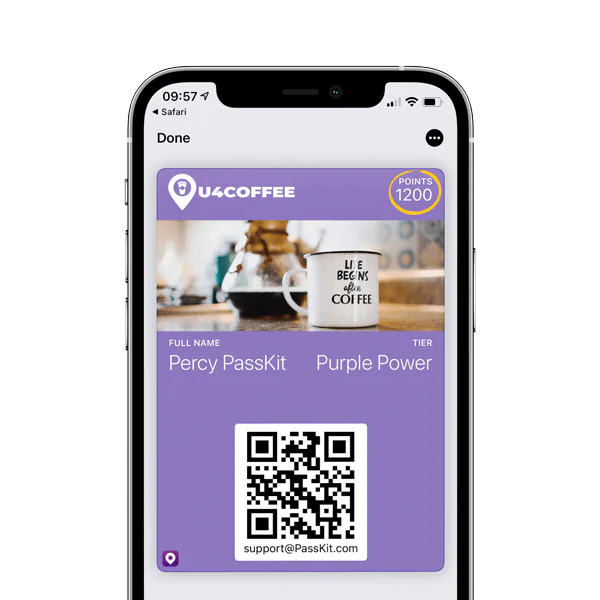
Digital loyalty cards give customers a convenient way to carry an identifier, barcode, QR code or supported reward balance in Apple Wallet or Google Wallet. The operational systems behind the program still determine which purchases qualify and how rewards are earned or redeemed.
What PassKit provides
PassKit provides infrastructure for creating, issuing, managing and updating compatible Apple Wallet and Google Wallet loyalty cards.
A concise connected workflow could use:
- The retail POS to record a qualifying purchase.
- Loyalty software or an authorized staff process to calculate and record the reward.
- PassKit to update supported information on the customer’s wallet card.
The pass identifies the member and displays supplied information. It does not independently observe purchases, calculate prescription eligibility or replace pharmacy-management and healthcare systems. The pharmacy remains responsible for its reward rules, privacy obligations and regulatory requirements.
Organizations planning connected workflows can read our guide to loyalty program integration.
For card appearance and issuance, see How to Design a Pharmacy Loyalty Card for Apple and Google Wallet.
Pharmacies with an existing retail rewards program can also explore PassKit’s loyalty wallet capabilities.
Frequently asked questions about pharmacy loyalty programs
Can pharmacies give loyalty points for prescriptions?
Sometimes. Prescription rewards depend on the country, state, payer, patient eligibility and program design. US federal fraud-and-abuse rules and state restrictions may apply. Major chains offer prescription-related rewards only under defined conditions, so pharmacies should not copy those arrangements without reviewing their own requirements.
Does a pharmacy loyalty program need an app?
Not necessarily. Customers can identify themselves using a phone number, physical card or compatible wallet card. A dedicated app may help with shopping or account management, but Apple Wallet or Google Wallet can provide a digital loyalty credential without requiring a separate branded pharmacy application.
What is the difference between pharmacy loyalty rewards and prescription discount cards?
Loyalty programs provide benefits for qualifying purchases or membership activity. Prescription discount cards offer access to a particular medication price under a separate arrangement. Insurance and manufacturer assistance programs operate under different rules again. Customers should check eligibility and combination conditions rather than assuming the benefits are interchangeable.
Can an independent pharmacy operate a loyalty program?
Yes. An independent pharmacy can offer a straightforward program for eligible retail purchases without building a complex customer app. It needs clear eligibility and redemption rules, reliable customer identification, accurate balances and appropriate safeguards. Prescription-related incentives should be introduced only after the pharmacy confirms the applicable restrictions.
Final thoughts on pharmacy loyalty programs
Effective pharmacy loyalty programs need clear earning, redemption and refund rules that staff can apply consistently. Prescription-related activity requires additional legal, payer and privacy safeguards rather than being treated like an ordinary retail purchase.
Digital loyalty cards can make membership identifiers and supported reward information easier to access. They do not replace the POS, loyalty software or healthcare systems responsible for transactions, eligibility and protected information.