No need to reissue passes
Keep the same pass accurate instead of asking customers to download a new one.

Update individual passes, customer segments or enterprise-scale pass programmes through the PassKit Portal, automation platforms or API integrations without reissuing passes.

Balances change, memberships renew, appointments move, and offers expire. PassKit helps you keep wallet passes current without creating a separate update project.
Keep the same pass accurate instead of asking customers to download a new one.
Start with Portal updates, move into no-code automation, then scale to full API integrations.
Reduce repetitive update work across customer service, marketing, and operations.
PassKit can update pass content when the underlying programme data changes; wallet display remains platform and device dependent.
PassKit supports manual updates, no-code automation, and full API integrations so you can scale without changing platforms.
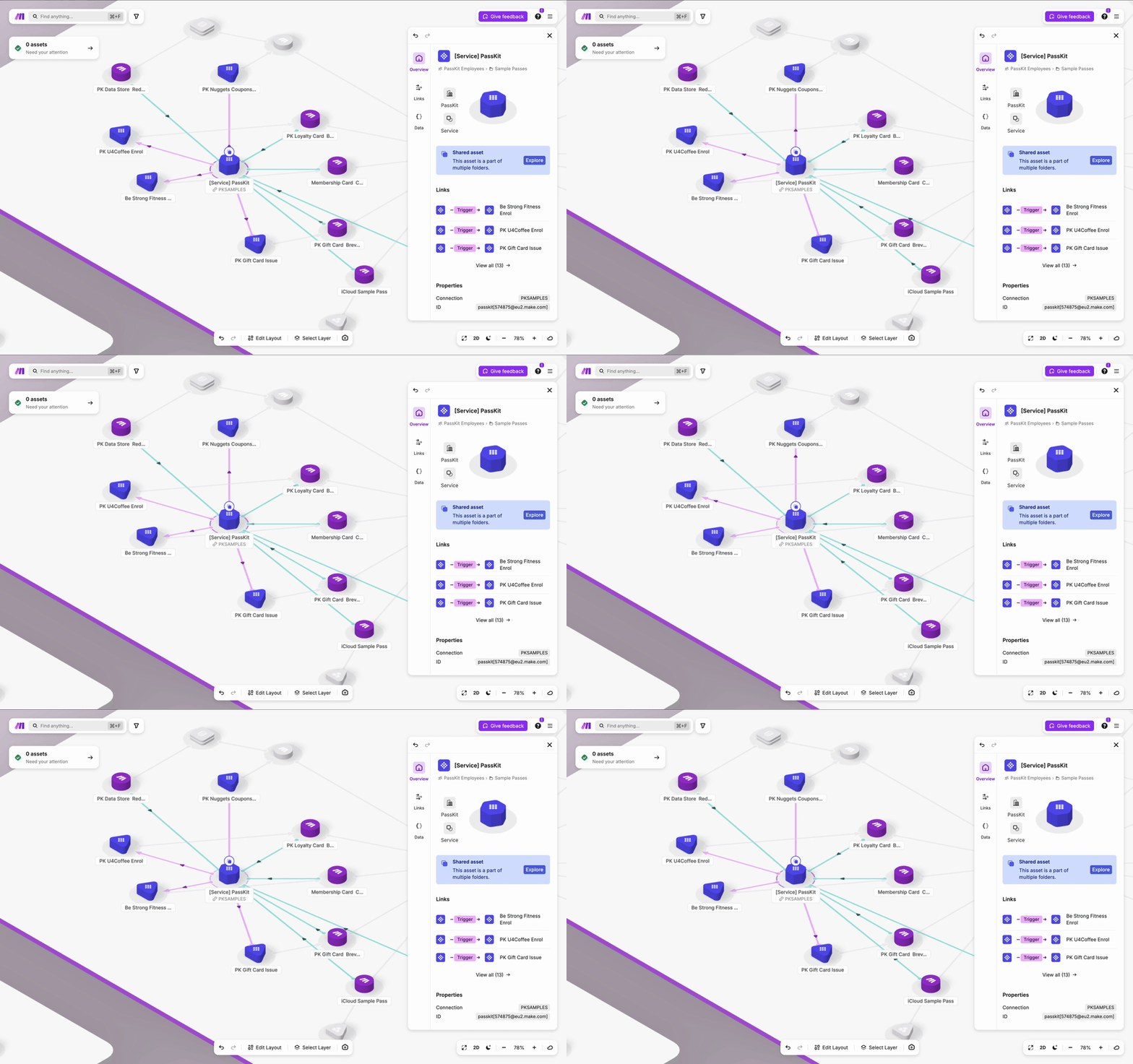
Keep every pass current with global updates, manual edits, no-code workflows, or API-driven automation.
Change shared branding and content in one place.
Make manual changes in the PassKit Portal without an integration project.
Connect PassKit to business tools and keep customer information current.
Use the API when your wallet program needs deeper automation.
Common questions about keeping passes current after launch.
Common examples include balance changes, membership renewals, appointment reminders, expiry changes, and other lifecycle updates.
Not always. Many teams start with manual updates or no-code automation and only add deeper developer integration when the program needs it.
Integrations connect PassKit to the surrounding systems. Automation is what keeps wallet information current as those systems change.
It becomes more important when the program needs timely updates, recurring workflows, or operational scale that manual processes can no longer handle well.