One system, many use cases
Loyalty, membership, offers, gift cards, tickets, and boarding passes can all run from the same platform.

PassKit brings together the operational wallet capabilities teams need, with a practical path from a business-led launch to deeper technical integration across Apple Wallet and Google Wallet.

PassKit helps you avoid fragmented tools, manual workarounds, and disconnected reporting by bringing pass design, customer records, updates, scanning, launch pathways, and measurement together.








Loyalty, membership, offers, gift cards, tickets, and boarding passes can all run from the same platform.
Business teams can launch quickly, and developers can step in when the programme needs deeper integration.
Design, enrolment, delivery, updates, scanning, and analytics are all part of the platform before deeper integrations are added.
Use lifecycle, installation, distribution and operational data to improve the programme after launch.
PassKit handles the Apple Wallet and Google Wallet platform layer, so your team does not need to build, test, and maintain its own pass server. Launch with the tools you need today, then integrate with your existing systems when the workflow calls for it.
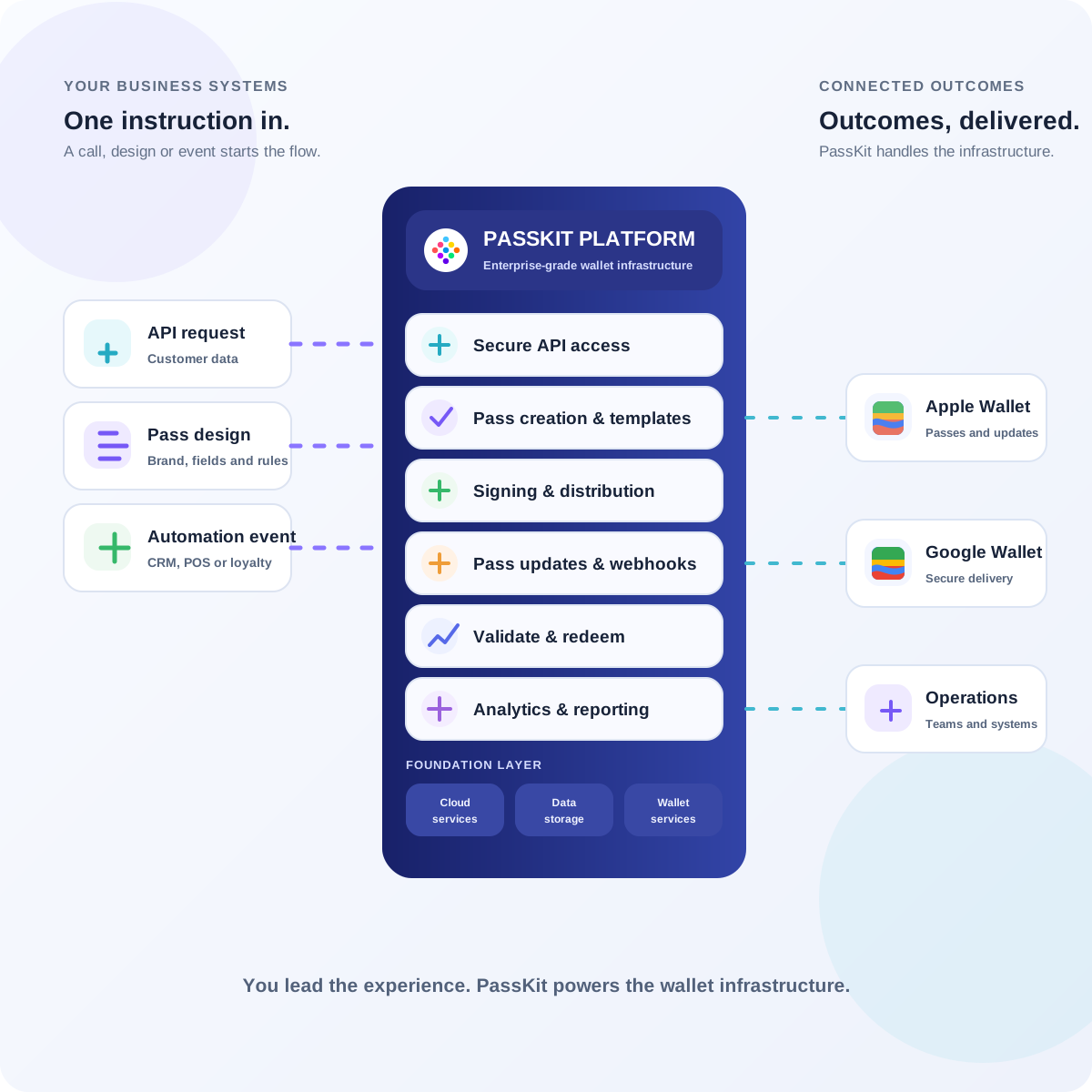
It is not just a way to create passes. It gives teams one place to launch, run, connect, and improve wallet programmes.
PassKit covers design, enrolment, delivery, validation, management, and measurement without requiring a different stack for each step.
Manage live passes, member records, updates, delivery, and scanning workflows without pushing everything back into custom engineering.
Connect customer, commerce, ticketing, and automation workflows through integrations, APIs, SDKs and webhooks.
Understand installation, distribution and pass activity so wallet programmes can improve after launch.
Explore the use cases, platform depth, what's included, and implementation routes that usually decide whether PassKit is the right fit.
Explore the wallet journeys PassKit supports and find the one that matches what you want to run.
Explore use casesUpdates turn passes into something customers can keep using instead of something they save once and forget.
View lifecycle managementReview the capabilities included in PassKit so you can see what is already covered before you commit.
See what's includedIntegrations, APIs, and webhooks make wallet part of the operating stack, not a side channel.
Explore integrationsThe Portal and templates cover fast launch paths. APIs, SDKs, gRPC, and deeper integrations cover technical ownership.
Explore implementation pathsBusiness teams can design, issue, and run programmes in the Portal. Developers can step in when the workflow needs deeper integration, automation, or system ownership.

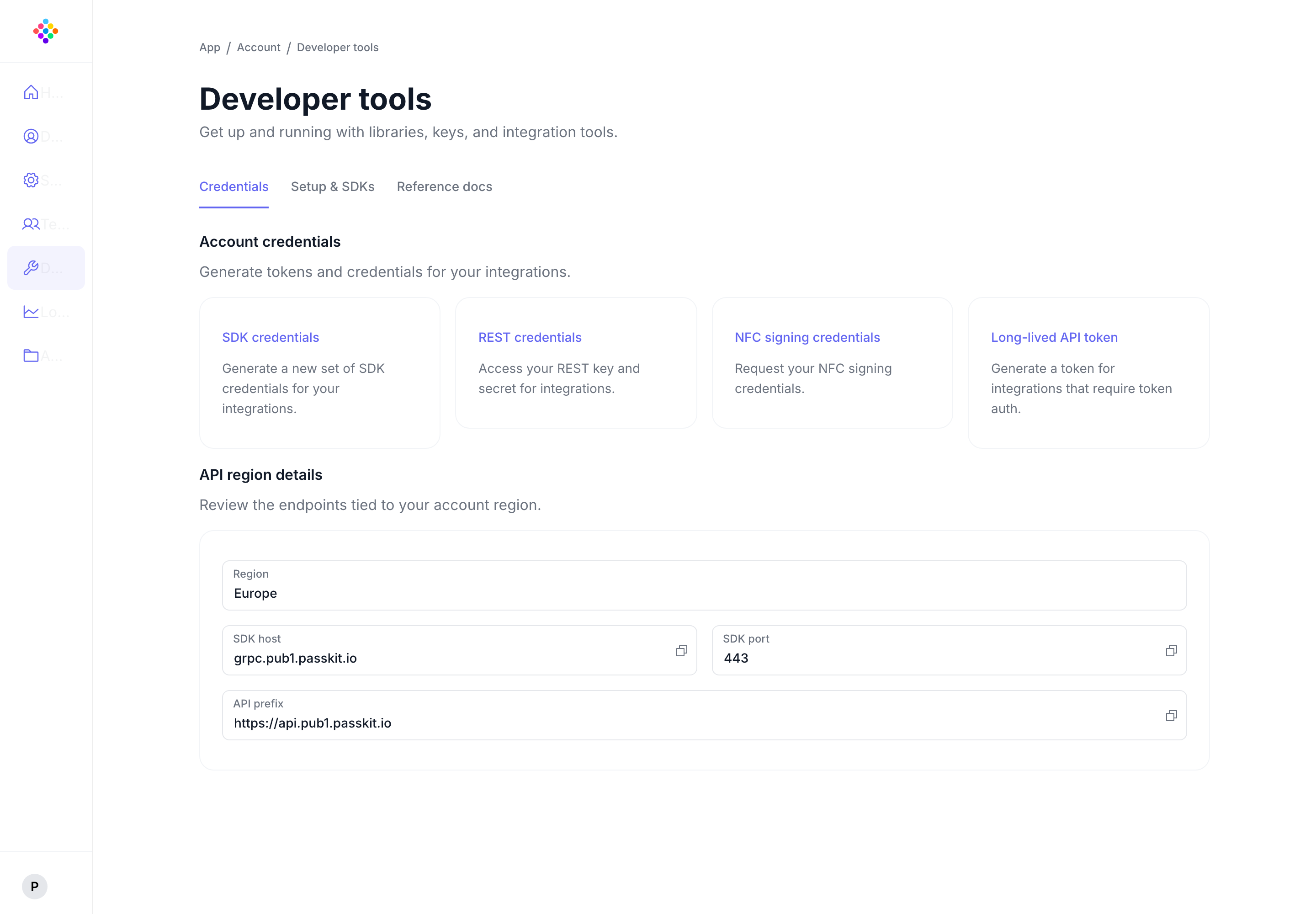
Use guided examples, templates, and the PassKit Portal to launch and run wallet programmes without starting with a long custom build.
QuickStarts, SDKs, APIs, and event-driven routes support deeper technical ownership without rebuilding the basics from scratch.
Everything you need to evaluate PassKit and move from first idea to launch.
Start with the essentials: what's included, how pricing works, and the fastest path to launch.
Review the included operational capabilities first, then move into the calculator when you want a commercial estimate for your deployment.
See what's includedTemplates and the Portal support fast launch. Developer entry points support deeper technical ownership when it becomes part of the plan.
See launch optionsThese answers cover the main questions that come up when teams are deciding whether to buy one platform, assemble separate tools, or build more themselves.
Separate tools often create fragmented data, inconsistent operations, and extra implementation overhead. PassKit gives teams one foundation across multiple use cases, wallets, and lifecycle workflows.
No. APIs, SDKs, gRPC, and webhooks are important parts of PassKit, but they sit inside a broader SaaS platform that also includes design, delivery, operations, updates, scanning, and analytics.
No. Business teams can launch and manage programs through the Portal and templates, while developers can extend the platform through APIs, SDKs, gRPC, and webhooks when deeper system integration is needed.
Yes. The platform is designed to work with operational systems rather than sit apart from them, using integrations, APIs, and event-driven pathways to keep wallet experiences synchronized.
PassKit is built for ongoing management as much as launch. Teams use it to update live passes, coordinate engagement, and measure adoption and performance over time.