Wallet-native format
Loyalty cards are one of the most familiar wallet formats, so customers understand them quickly.

Create a digital loyalty card customers can keep in Apple Wallet or Google Wallet for rewards, balances, and repeat visits.
Loyalty cards are one of the most familiar wallet formats, so customers understand them quickly.
You can try the pass first, then decide whether it fits the programme you want to run.
This format keeps points, status and rewards easy to check between visits.
A real example helps everyone picture the same customer experience before you build it.
Add the sample pass to your wallet to see how it looks, feels, and fits the customer experience before you start customising it.
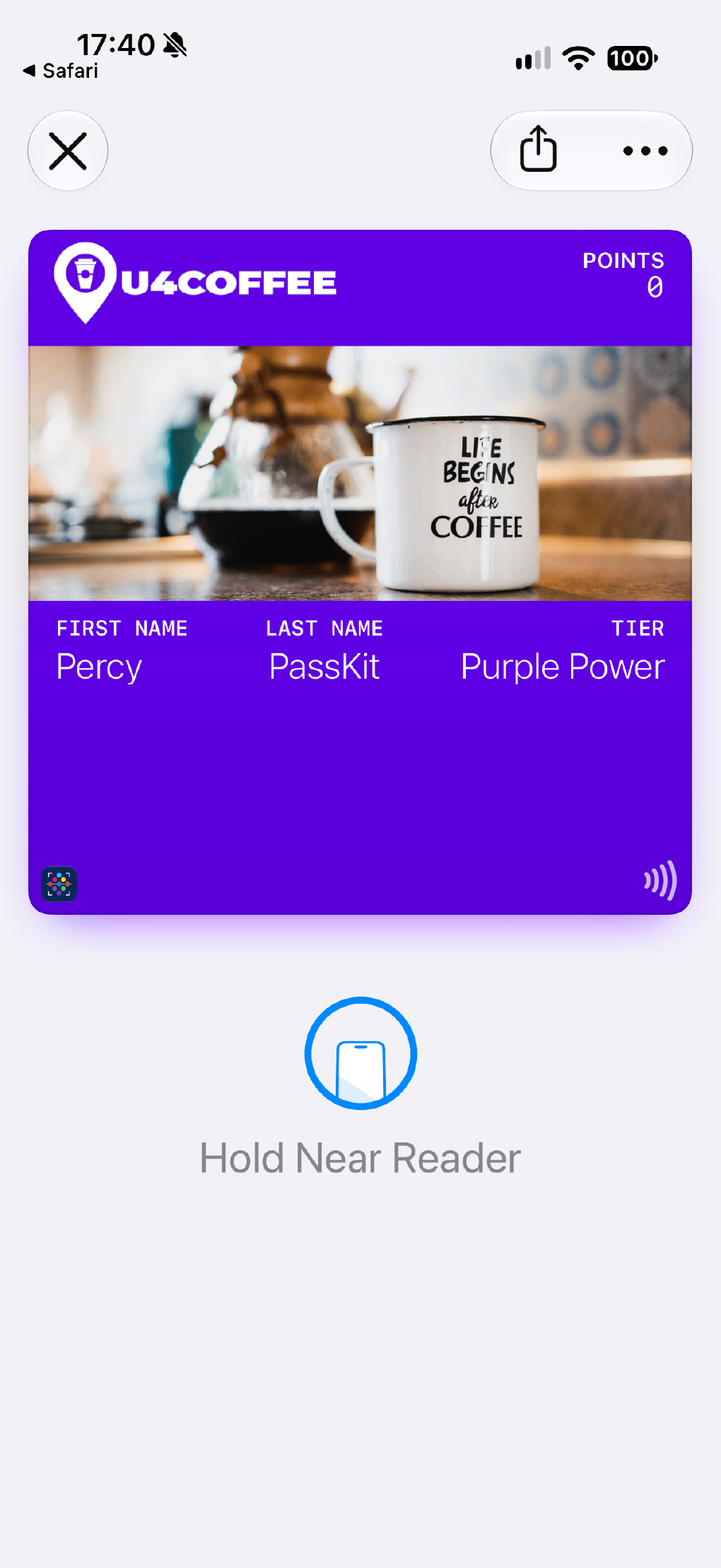
The next pages show how teams launch, price, and connect this pass type in practice.
The related use case shows the customer journey, operating model, and common ways teams use this format.
Related use caseSee the next steps for turning this example into a live programme.
Get startedSee how PassKit is priced while you are still shaping the scope.
See pricingExplore the developer pages if this pass needs APIs, automation, or system integration.
DevelopersQuick answers before you build.
Use it when you want customers to keep a loyalty card, points balance, or tier status in their wallet and reopen it between visits.
Yes. This format suits programmes where customers need to see progress, status, or rewards at a glance.
Try the example in your wallet first, then use the template to create your own version in PassKit.