
Restaurant Loyalty Platforms With Apple and Google Wallet Integration
Compare restaurant loyalty platform types that integrate with Apple Wallet and Google Wallet, from digital stamp cards to enterprise restaurant loyalty systems.
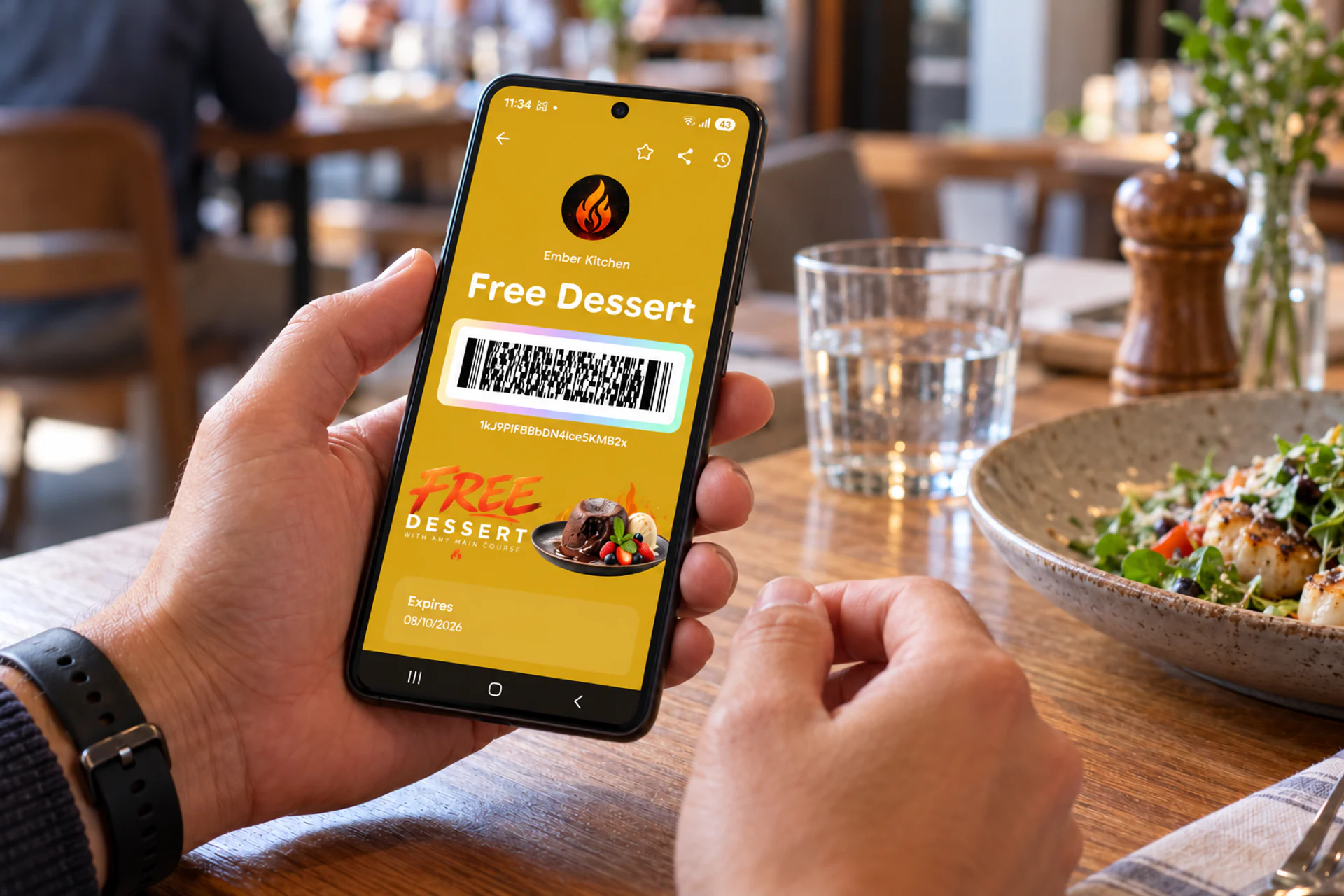
Restaurant loyalty platforms with Apple Wallet and Google Wallet integration do not all solve the same problem. One may replace a paper stamp card in a single cafe. Another may connect wallet passes to an existing loyalty engine. A third may form part of an enterprise restaurant technology stack spanning ordering, point of sale (POS), offers, and customer data.
That makes a simple ranked list misleading. The useful question is not which platform is universally best, but which type of platform fits the restaurant’s programme, systems, locations, and customer journey.
This guide compares the main platform types, then profiles a non-exhaustive selection of providers with relevant restaurant and mobile wallet capabilities. Inclusion and order do not represent an overall ranking. Features and availability can change, so restaurants should confirm current details directly with each provider before making a purchasing decision.
What Is a Restaurant Loyalty Platform With Wallet Integration?
A restaurant loyalty platform, sometimes described as restaurant loyalty software, manages some or all of the enrolment, earning, rewards, redemption, communication, and reporting involved in a loyalty programme. Wallet integration lets a member save a digital loyalty card or membership pass to Apple Wallet or Google Wallet.
The pass can give customers a convenient way to:
- Find and present their membership identifier.
- View supported information such as stamps, points, tier, or reward status.
- Scan a barcode or QR code at the restaurant.
- Receive relevant pass updates, subject to platform and device settings.
- Access the programme without keeping a physical card.
Wallet support does not mean every platform offers the same loyalty logic, POS connections, messaging controls, or redemption process. It also does not always remove the need for a restaurant or customer app. The wallet pass may be the main customer experience, an extension of an app, or simply a portable membership identifier.
Five Types of Restaurant Loyalty Platform
The following categories describe where a product sits in the loyalty stack. Some providers cross more than one category, but identifying the primary model makes comparison easier.
Wallet-native stamp card platform
A wallet-native stamp card platform replaces the familiar paper punch card with a pass stored in Apple Wallet or Google Wallet. Customers typically join through a link or QR code, while staff add stamps and redeem rewards through a scanner or staff application.
This model can suit independent restaurants, cafes, bakeries, and small chains that want a straightforward visit- or purchase-based reward without developing an app. Its strength is simplicity; its limitation is that it may not support complex points, tiers, promotions, or enterprise data requirements.
Ready-to-run wallet loyalty platform
A ready-to-run wallet loyalty platform offers a packaged programme with a broader choice of mechanics, such as stamps, points, cashback, or membership rewards. The wallet pass remains the main customer-facing card, while the provider supplies the enrolment, staff, reward, and reporting workflows needed to operate it.
This model can suit small and mid-sized restaurants that want more flexibility than a simple stamp card without commissioning a custom loyalty system. The main comparison point is how the platform records earning and redemption activity at the counter and whether that workflow fits the restaurant’s existing equipment.
Wallet infrastructure platform
A wallet infrastructure platform creates and manages digital passes while connecting them to a restaurant’s existing loyalty, CRM, POS, ordering, or customer data systems. The wallet pass becomes a customer-facing layer rather than the system that defines every earning and reward rule.
This model can suit restaurant groups with an established technology stack or a custom loyalty proposition. It offers more design and integration flexibility, but generally requires a clear source of truth for member and transaction data.
Restaurant- or POS-native enterprise loyalty platform
An enterprise restaurant loyalty platform may manage loyalty alongside offers, ordering, guest profiles, campaigns, and restaurant technology integrations. Wallet passes are one customer touchpoint within a larger system.
This model can suit multi-location and enterprise restaurant brands that need loyalty activity connected to broader operations. Implementation, commercial scope, and integration requirements are normally greater than those of a standalone digital stamp card.
App-first platform with wallet support
An app-first platform makes its mobile application the main place where customers join, manage rewards, or interact with the programme. Apple Wallet or Google Wallet may hold a member card or code for faster identification at the point of service.
This can work when the restaurant wants the additional features of a customer app. It is less suitable when the goal is specifically to avoid asking customers to download one.
Which platform type fits which restaurant?
| Restaurant situation | Most relevant starting type | Reason to shortlist it |
|---|---|---|
| Independent cafe replacing a paper punch card | Wallet-native stamp card | Familiar earning rules and a lightweight staff workflow |
| Small restaurant wanting points, stamps, or cashback without a custom build | Ready-to-run wallet loyalty platform | Packaged programme with broader reward options |
| Restaurant group with an existing CRM, POS, or loyalty engine | Wallet infrastructure platform | Adds the wallet layer while existing systems retain programme logic |
| Multi-location enterprise requiring restaurant-specific loyalty operations | Restaurant- or POS-native enterprise platform | Loyalty and wallet access can sit within a wider restaurant technology stack |
| Brand whose application is central to ordering and engagement | App-first platform with wallet support | Wallet provides faster member identification while the application remains primary |
This is a starting-point framework rather than a ranking. A restaurant should still test the complete customer and staff journey before choosing a provider.
Restaurant Loyalty Platforms Compared by Type
This table compares operating models, not an overall winner. The right shortlist depends on whether a restaurant needs an out-of-the-box programme, a wallet layer for existing systems, or a wider enterprise loyalty product.
| Platform | Primary platform type | Wallet role | Typical programme fit | Customer app requirement | Implementation consideration |
|---|---|---|---|---|---|
| PassKit | Wallet infrastructure platform | Creates, updates, distributes, and manages connected wallet passes | Custom restaurant loyalty journeys or wallet delivery for an existing system | No separate customer app required for the wallet pass | The restaurant must define where loyalty rules and transaction data are managed |
| Slerp | Restaurant-focused loyalty platform | Apple Wallet and Google Wallet pass that keeps points, stamps, and rewards in sync | Restaurants combining in-store and online loyalty | No customer app required | Review how the staff scanning workflow and Slerp platform fit the restaurant’s existing operations |
| Loopy Loyalty | Wallet-native digital stamp card | The wallet pass is the primary customer loyalty card | Visit- or purchase-based stamp programmes | No customer app required | Best aligned with straightforward stamp-and-reward mechanics |
| meed | Ready-to-run wallet loyalty platform | Mobile wallet membership card with earning and reward interactions | Local-business loyalty using stamps and rewards | Uses an Apple Wallet or Google Wallet membership card | Review which earning method fits the restaurant’s counter workflow |
| PAR Punchh | Restaurant-native enterprise loyalty | Smart Pass extends membership into Apple Wallet and Google Wallet | Multi-location and enterprise restaurant loyalty | Wallet enrolment can provide a no-app route; broader deployments may also use an app | Wallet capabilities form part of a larger Punchh implementation and may require specific modules and POS support |
| Passtastic | Ready-to-run wallet loyalty platform | Apple Wallet and Google Wallet pass is the customer-facing card | Restaurant stamps, points, or membership programmes | Markets a no-customer-app experience | Confirm how staff issue value and verify redemptions at each location |
| Stamp Me | App-first loyalty platform with wallet support | Wallet stores a loyalty member card and identification code | App-based stamp programmes with wallet convenience | Customer app remains part of the full loyalty experience | Not a purely wallet-native, app-free journey |
How the Platforms Differ
Each restaurant loyalty platform takes a different approach to programme management, wallet integration, customer participation, and staff operations. The profiles below explain the role each product is designed to play and the implementation questions restaurants should consider.
PassKit
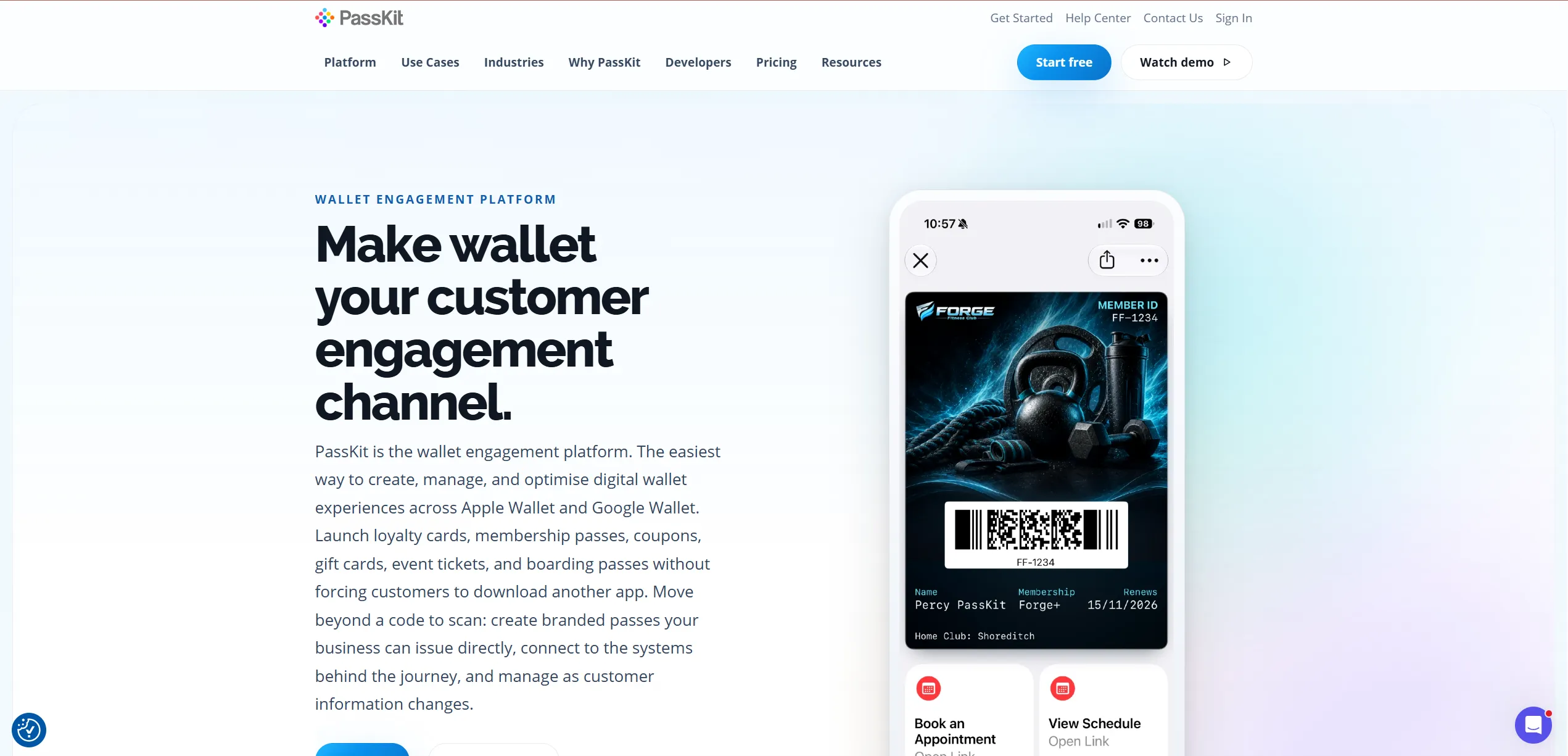
PassKit is a wallet infrastructure platform best suited to restaurant groups and technology teams that already have loyalty rules in a CRM, POS, ordering platform, or loyalty engine, or that need a more tailored programme. Customers save a branded loyalty pass to Apple Wallet or Google Wallet without installing a separate consumer app, while PassKit handles pass creation, distribution, updates, validation, and lifecycle management.
Earning and redemption activity can remain in the restaurant’s existing systems, with integrations and APIs keeping the wallet pass aligned with the underlying member record. This gives restaurants control over their programme design and source of truth, while requiring them to define how transaction data and loyalty rules connect to the wallet layer.
Restaurants can review PassKit’s loyalty card capabilities, integration options, and pass redemption tools, or explore PassKit for hospitality.
Slerp
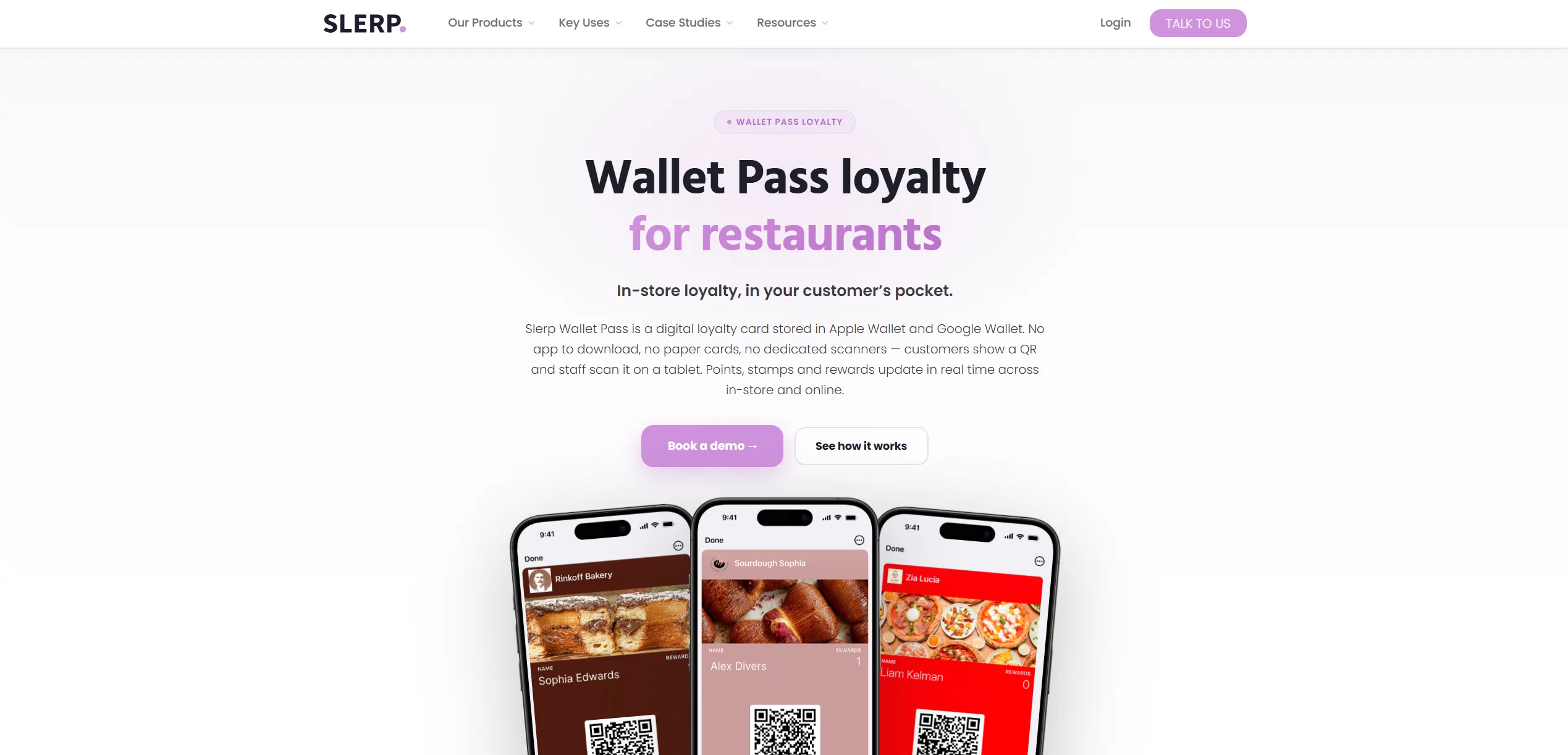
Slerp is a ready-to-run wallet loyalty platform with restaurant-ordering integration. It is best suited to restaurants that want points, stamps, milestones, and rewards to remain consistent across direct online orders and in-store visits. Customers can keep their loyalty QR code in Apple Wallet or Google Wallet without downloading a separate app.
At the counter, staff can scan the customer’s code using the Slerp partner app on a tablet to add value or redeem a reward, while supported online activity feeds the same customer profile. The model is strongest for restaurants using the wider Slerp platform; businesses with a different ordering or POS stack should confirm how their existing systems would connect to the loyalty workflow.
Loopy Loyalty
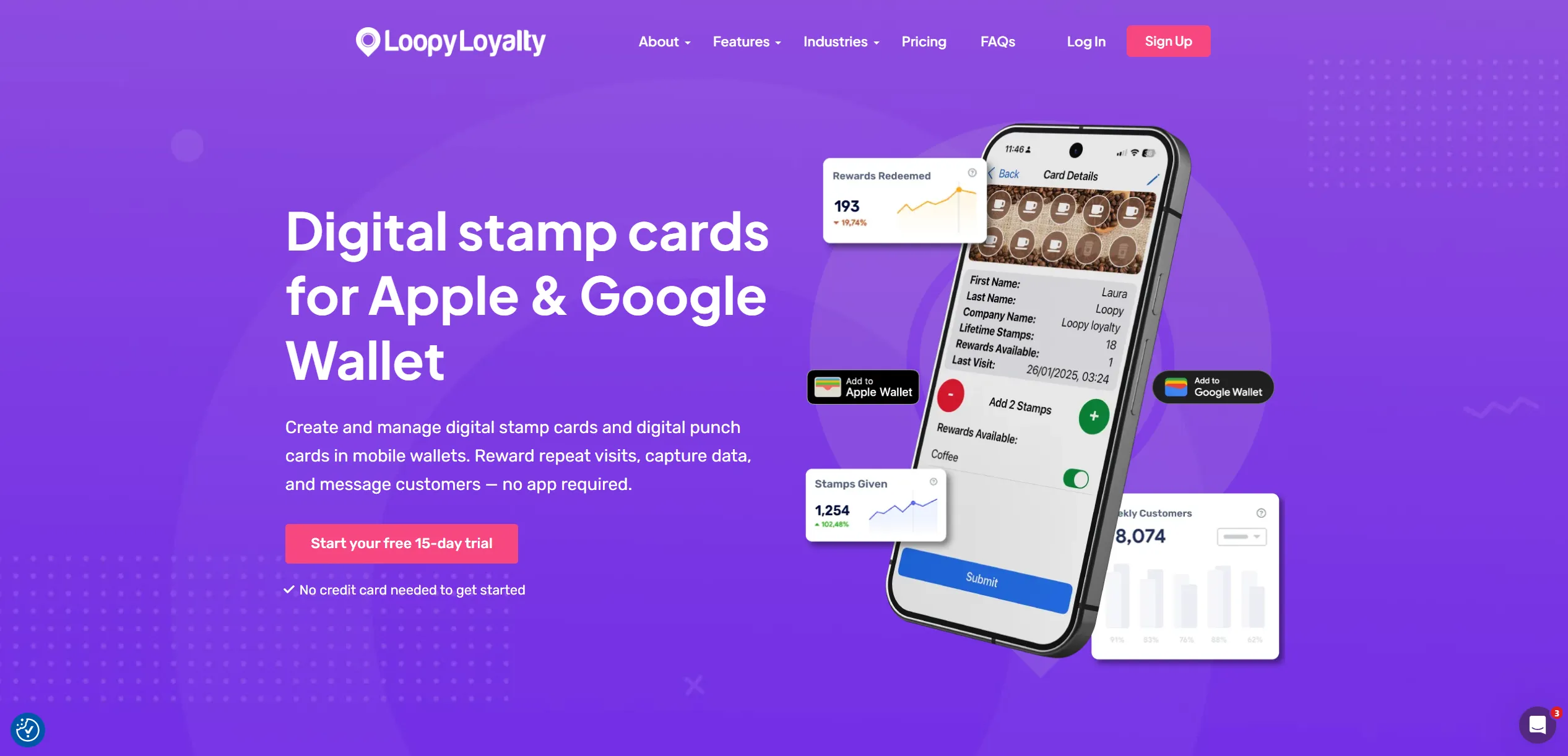
Loopy Loyalty is a wallet-native stamp card platform best suited to independent restaurants, cafes, bakeries, and smaller groups replacing a paper visit card. Customers join through a QR code or link and save the card directly to Apple Wallet or Google Wallet, so no customer app is required.
Staff use the Stamper App to add stamps and redeem completed rewards from a phone, while the dashboard supports card management, reporting, staff access, and multiple locations. Its focused stamp-and-reward model keeps counter operations simple; restaurants that need spend-based points, complex tiers, or transaction-level automation may be better served by a broader loyalty engine or connected infrastructure platform.
Loopy Loyalty is operated by PassKit but included separately because it serves this packaged stamp-card use case. See the Loopy Loyalty restaurant programme and service disclosure for more information.
meed
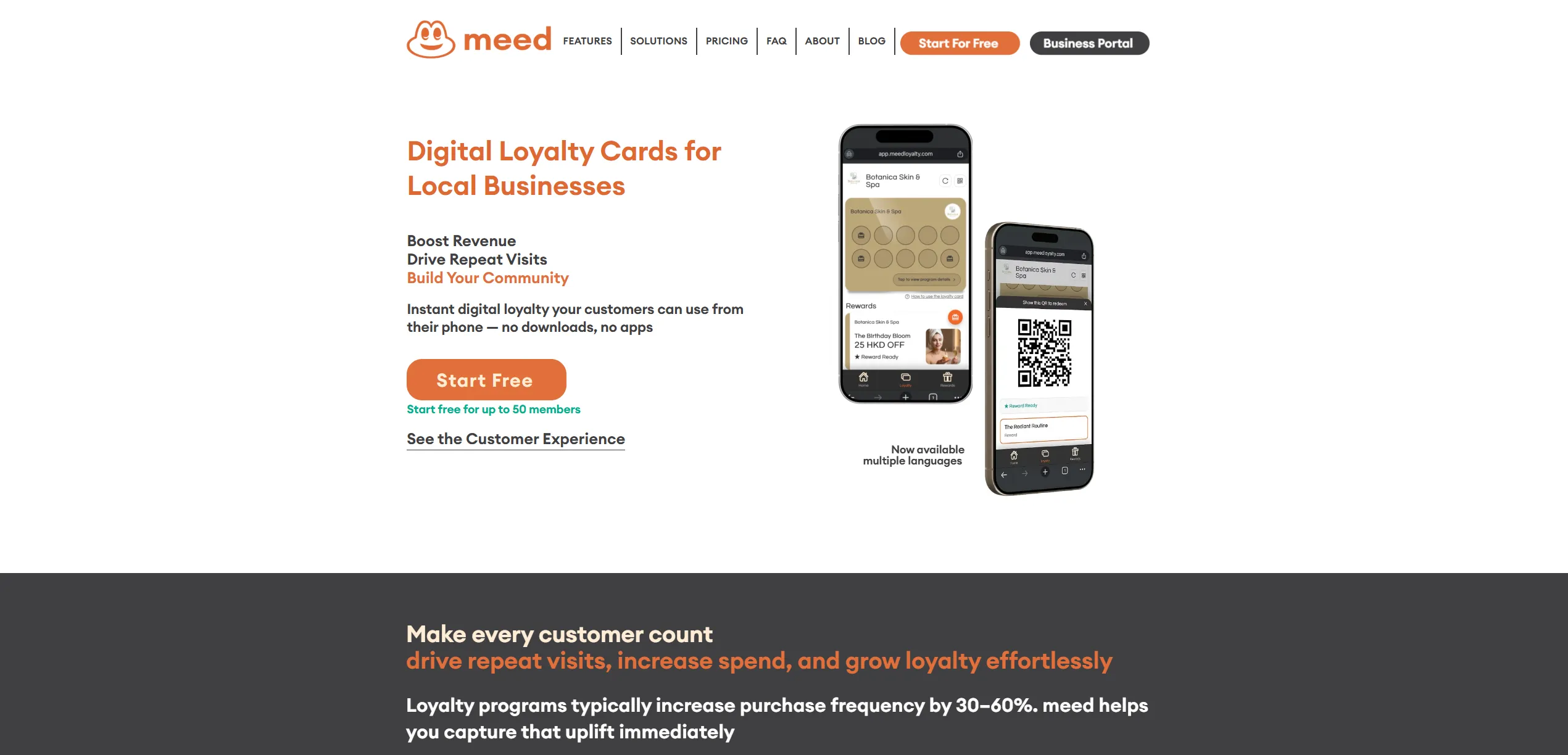
meed is a ready-to-run wallet loyalty platform best suited to independent restaurants and other local businesses that want several earning methods without developing a customer app. Customers can join through a QR code, NFC interaction, or link and use a branded loyalty experience from their phone, with support for Apple Wallet and Google Wallet passes.
Programme options include digital stamps, NFC check-ins, receipt scanning, milestone rewards, and coupons, while operators manage activity through meed’s business tools. This flexibility lets a restaurant choose a workflow that matches its service model; teams seeking deep POS-driven automation should confirm how their transaction systems and chosen earning method will work together.
PAR Punchh
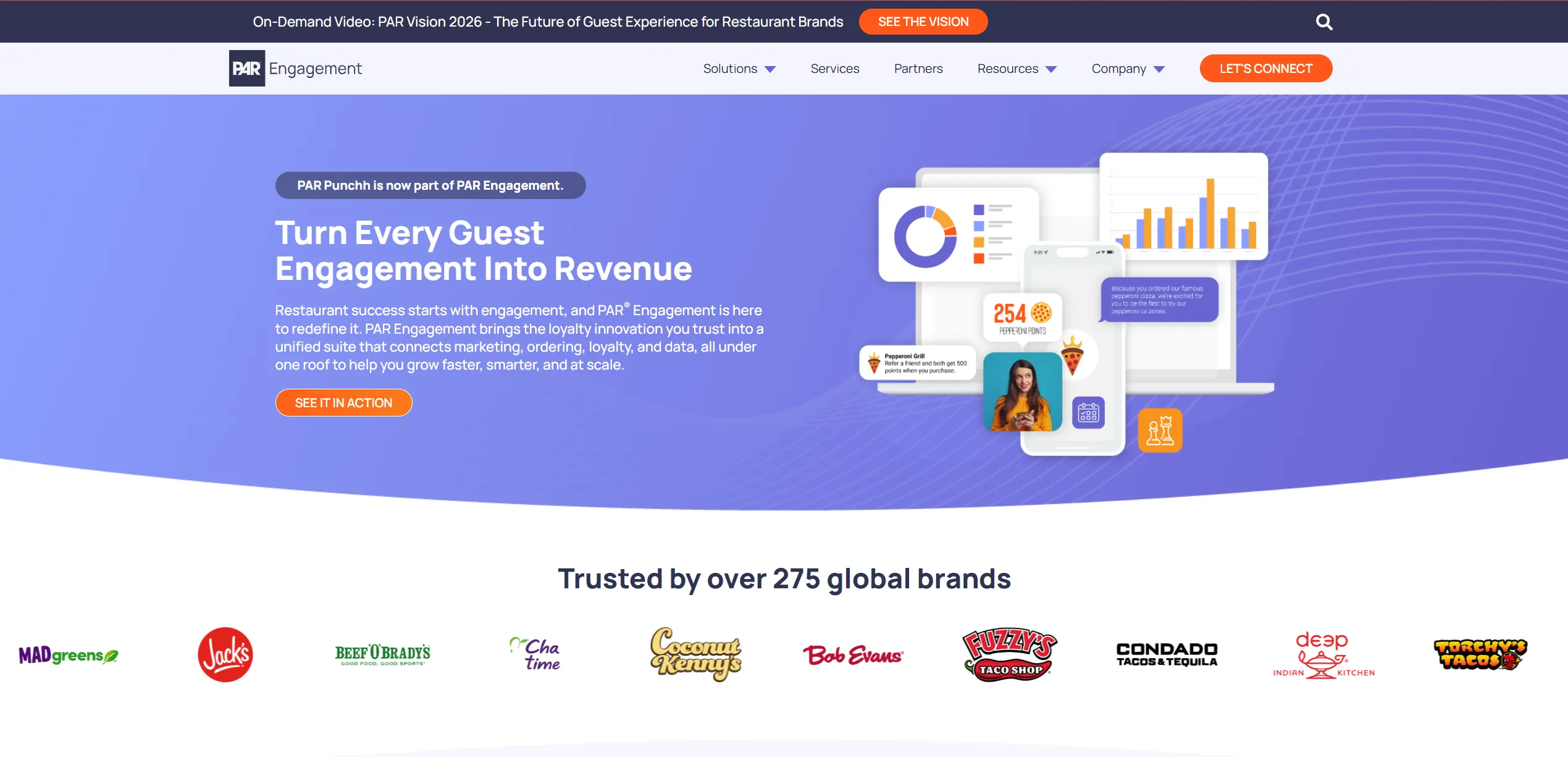
PAR Punchh is a restaurant-native enterprise loyalty platform best suited to established multi-location brands already using, or planning to adopt, the wider Punchh engagement stack. Smart Passes let guests join, earn, view points and rewards, and redeem through Apple Wallet or Google Wallet without requiring a customer app for the wallet journey.
The passes work with Punchh and the restaurant’s POS through supported QR or NFC hardware and integration paths, keeping wallet activity connected to the broader guest profile. Smart Passes are an additional module, so buyers should include compatible POS equipment, API support, implementation scope, and commercial requirements in their evaluation. The official Smart Passes overview details those dependencies.
Passtastic
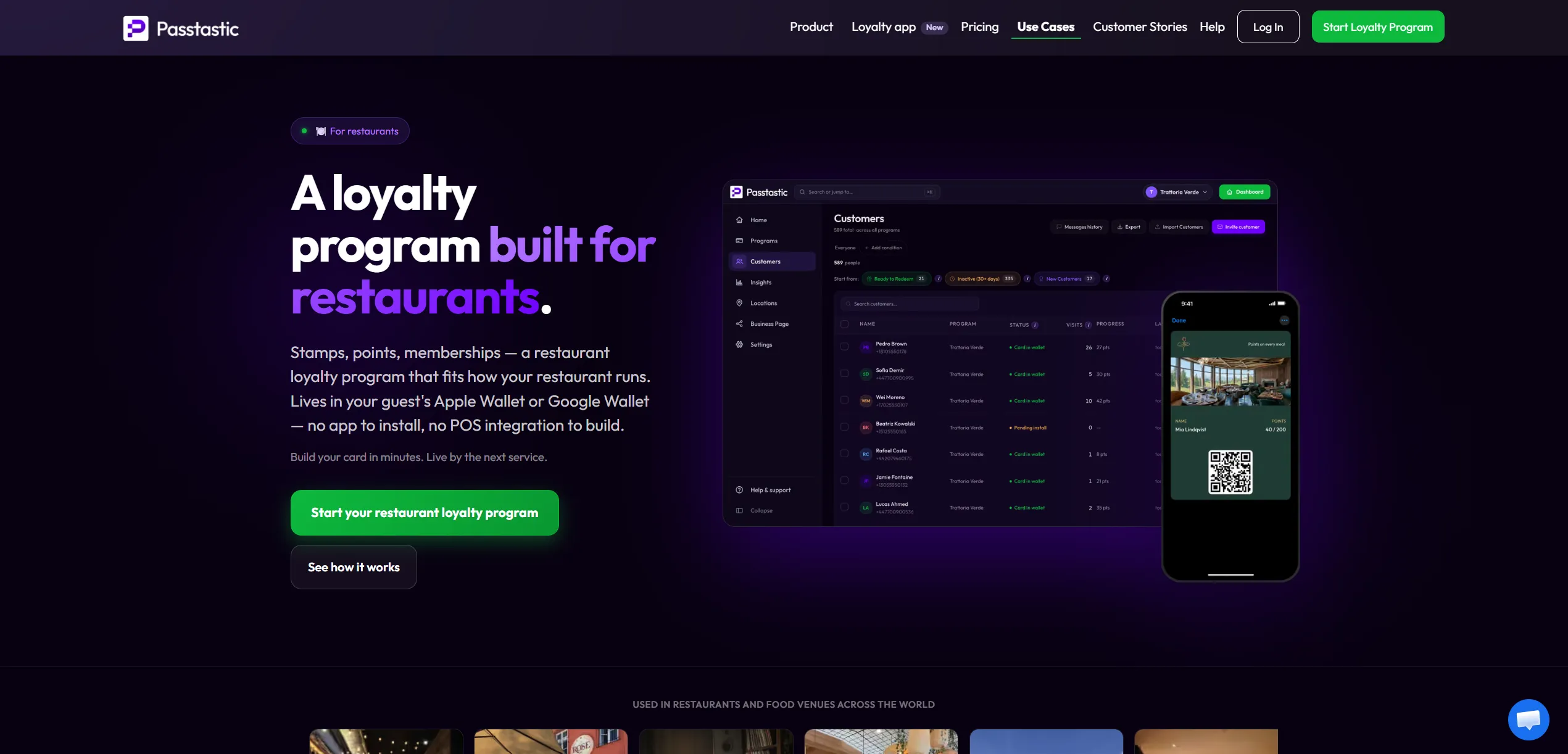
Passtastic is a ready-to-run wallet loyalty platform best suited to independent restaurants and smaller groups that want to launch quickly without building an app or POS integration. Restaurants can configure stamps, points, dining credit, or membership-style programmes, and guests join through a QR code or link that adds the card to Apple Wallet or Google Wallet.
The platform provides the programme, customer, campaign, and scanning workflows needed to run loyalty as a standalone service. This makes it a practical fit when simplicity and speed matter most; restaurants that want earning and redemption to happen automatically inside an existing POS should confirm the available integration and staff process before choosing that model.
Stamp Me
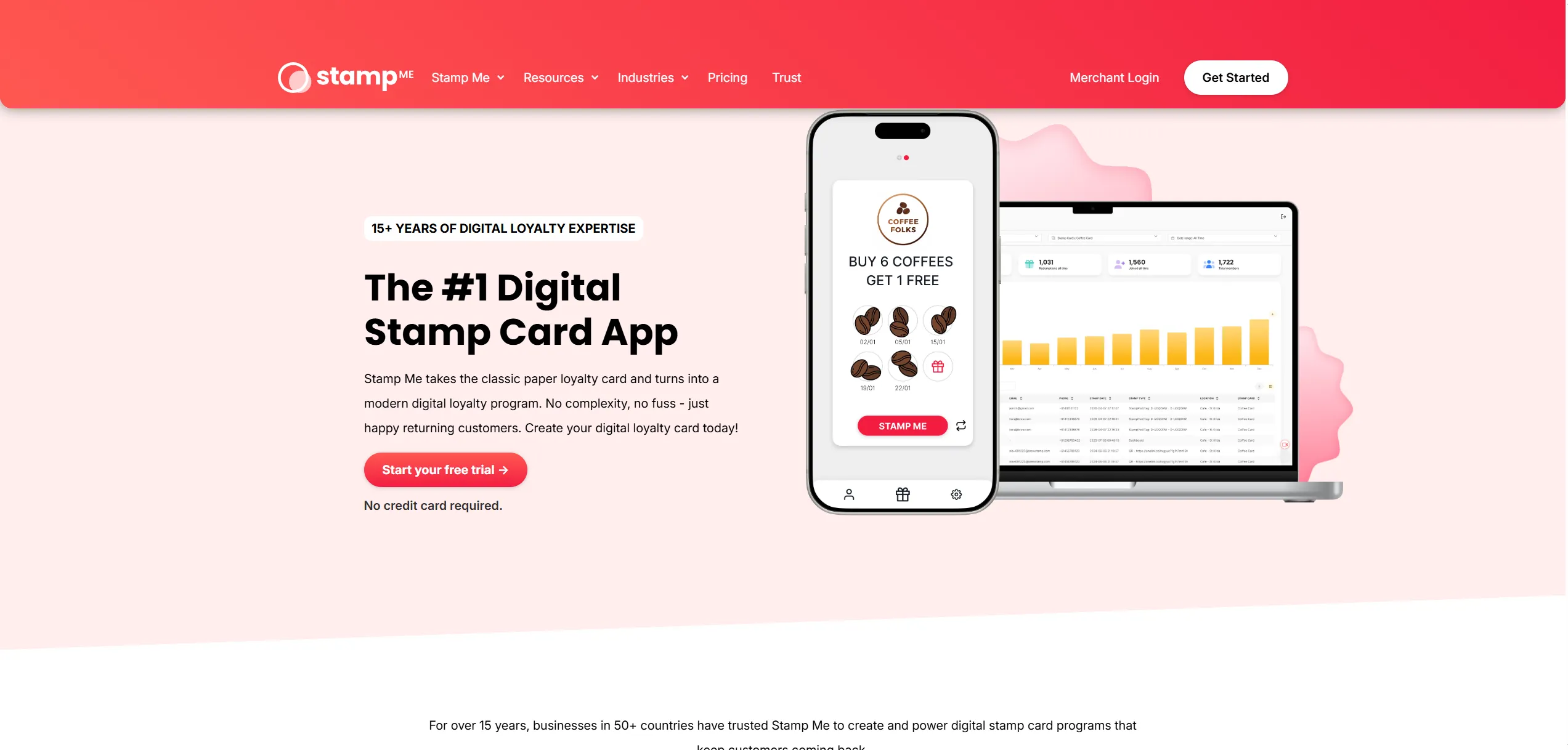
Stamp Me is an app-first loyalty platform best suited to restaurants that want a dedicated digital stamp-card application while giving returning members faster identification at checkout. Customers first download Stamp Me, create an account, and join the programme; they can then save their unique member code to Apple Wallet or Google Wallet.
At the counter, staff scan that code with Stamp Business to issue stamps or redeem rewards. The wallet pass makes the member code easier to present, but the Stamp Me app remains the main place for joining and using the broader loyalty experience. Restaurants prioritising a completely app-free journey should therefore compare it with a wallet-native alternative.
What Apple Wallet and Google Wallet Integration Should Include
A platform displaying Apple Wallet and Google Wallet logos has not necessarily integrated the complete loyalty journey. Restaurants should establish what the integration actually covers on both platforms.
At minimum, a useful evaluation should confirm:
- Enrolment: How a new and existing member receives the correct pass for their device.
- Programme visibility: Which identity, stamps, points, rewards, tiers, expiry information, and terms appear on the pass.
- Earning: How staff or connected systems identify the member and record an eligible transaction or visit.
- Redemption: How the restaurant validates the reward, prevents unintended reuse, and records the outcome.
- Pass updates: Which system changes the displayed balance or reward status and how quickly the pass reflects it.
- Operational ownership: Which steps happen in the wallet, customer app, staff app, POS, browser, or loyalty engine.
- Lifecycle and data: How consent, profile changes, pass removal, exports, reporting, and programme exit are handled.
Wallet compatibility should not be treated as automatic POS integration. A platform may create excellent passes while relying on a separate system for transaction data and loyalty rules. Conversely, an enterprise loyalty platform may offer deep restaurant operations while treating the wallet as one optional member touchpoint. The right model depends on which system the restaurant wants to own each job.
How Restaurants Should Choose Between Platform Types
Before requesting demonstrations, define the programme and operational constraints. These questions will narrow the field more effectively than comparing a long feature checklist.
What should customers earn and redeem?
A simple visit-based reward can work well in a digital stamp card. Spend-based points, tiers, item-level rules, personalised offers, and rewards shared across brands may require a more capable loyalty engine. Decide the rules first, then select technology that can operate them clearly.
Is the wallet pass the programme or one channel within it?
For a small cafe, the pass may be the entire customer-facing loyalty experience. For a restaurant group, it may display an identity, balance, or reward calculated elsewhere. This determines whether to choose an out-of-the-box wallet product or infrastructure that connects to existing systems.
Must the experience be app-free?
Apple Wallet and Google Wallet support does not guarantee an app-free journey. Confirm where customers enrol, change their details, review activity, and claim rewards. If reducing download friction is a priority, test the complete journey rather than checking only for wallet logos on a feature page.
How will staff issue value and process redemptions?
The staff workflow is as important as the customer interface. Compare the speed and controls of scanning, POS-connected earning, manual actions, NFC, receipt validation, and other supported methods. Include permission management, multi-location access, exception handling, and training in the assessment.
Which system owns customer and transaction data?
Identify the source of truth for member profiles, consent, purchases, points, rewards, and redemptions. If those records already live in a restaurant platform or loyalty engine, the wallet product must exchange data reliably with it. If the new platform will own them, review export, integration, and migration options.
What evidence can the platform report?
Ask how the platform measures enrolment, installed passes, earning, redemption, location performance, and customer activity. Wallet passes can reduce friction, but reporting should not imply that every displayed update or notification was viewed by the customer.
A Restaurant Loyalty Platform Demonstration Test
Use the same counter-to-redemption scenario when evaluating each platform so that demonstrations remain comparable:
- A new customer discovers the programme in the restaurant.
- The customer enrols and saves the loyalty card.
- A staff member records an eligible purchase or visit.
- The pass reflects the new value.
- The customer earns and redeems a reward.
- A manager reviews the activity and resolves an exception.
- The customer removes the pass or leaves the programme.
Record which steps happen in the wallet, an app, a browser, a staff device, the POS, or another system. Then compare implementation effort, operating cost, support, data access, security, and the amount of staff training required.
When PassKit or Loopy Loyalty Fits
Loopy Loyalty fits restaurants that want a packaged digital stamp card and a straightforward staff stamping workflow. It is designed to get a familiar repeat-visit programme into Apple Wallet and Google Wallet without requiring a custom customer app.
PassKit fits restaurants and technology teams that want wallet passes integrated with an existing loyalty programme or a more customised customer journey. The restaurant can retain its own rules and systems while using PassKit for pass creation, distribution, updates, lifecycle management, and supported messaging.
They are related services, not interchangeable product names. PassKit operates Loopy Loyalty, while each product serves a different implementation need.
For broader programme strategy rather than platform selection, read how to create a restaurant loyalty programme. For the mechanics of using wallet passes as the loyalty experience, see mobile wallet loyalty programmes.
Explore PassKit for hospitality or start building a wallet loyalty programme.